Skip to content

A retail bay sits empty, a tenant is ready to sign, and the rooftop unit above it is fifteen years old and limping toward another Central Valley summer. Whether you replace it now and who carries the cost can stall the whole deal, so the number matters before the lease does.
For most Modesto strip bays the answer lands between $9,000 and $28,000 installed, depending on tonnage and how much of the existing roof curb and electrical can be reused. This guide breaks that range into line items so you can read a bid rather than accept a total.
Which Line Items Make Up a Strip Mall HVAC Replacement Price?
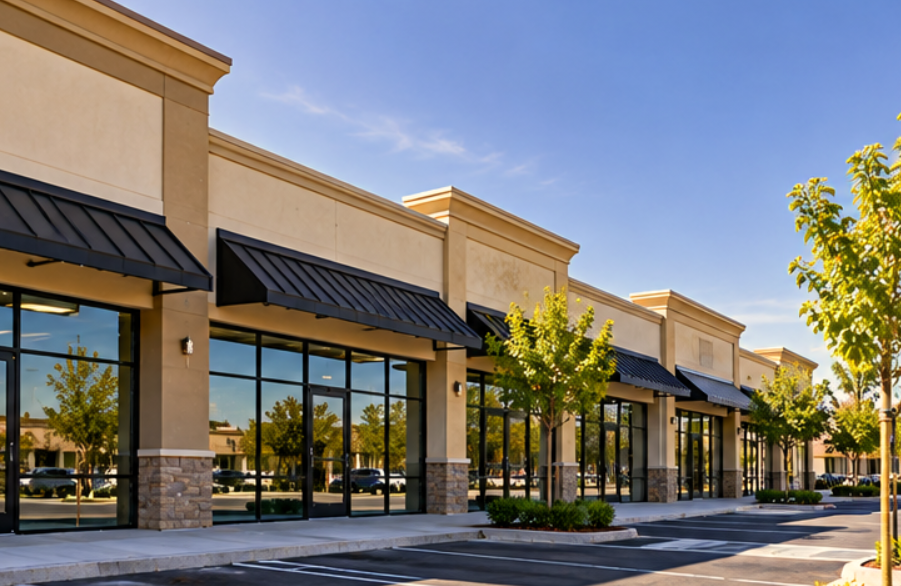
Most small retail bays run a packaged rooftop unit between 3 and 7.5 tons, and the equipment is only part of what you pay. The table below splits a typical changeout into the pieces that should appear separately on any bid you are asked to sign.
| Line item | General Modesto-area range | What moves it |
|---|---|---|
| 3-ton packaged RTU, installed | $9,000–$16,000 | Efficiency tier and brand |
| 5-ton packaged RTU, installed | $12,000–$22,000 | The most common retail size |
| 7.5-ton packaged RTU, installed | $16,000–$28,000 | Larger bays, restaurants, heavy glass |
| Curb adapter | $500–$2,000 | New footprint rarely matches an old curb |
| Crane and rigging | $1,200–$1,800 | One or two story roof, standard lift |
| Electrical and disconnect | $500–$2,500 | Panel capacity and whether a disconnect exists |
| Permit and inspection | $250–$800 | Varies by jurisdiction and scope |
Treat those as general planning ranges for the Modesto area rather than a quote, because roof access, curb condition and the tenant’s intended use all move the figure. They are useful for testing whether a bid sits in a believable band before you start comparing contractors.
What Drives the Cost of Strip Mall HVAC Replacement?
Four things move the number more than the brand on the cabinet. Capacity comes first, because tonnage sets the equipment line and the electrical draw together. Efficiency tier comes second, and in this climate it carries more weight than it would almost anywhere else in California.
Central Valley cooling runs long, and summer afternoons hold packaged rooftop units near full load for months rather than weeks. Those run hours shorten the payback on a higher efficiency tier, so the step up from a baseline unit is a genuine budget decision rather than an upsell to wave away.
The refrigerant transition is the third. Light commercial equipment built from 2025 uses A2L refrigerants such as R-454B, as R-410A is phased down under the EPA’s AIM Act rules. That affects availability, parts, and whether an existing line set or curb can carry over to the new unit.
Site work is the fourth and the one that surprises people. Everything between the crane and the duct transition is labor on your roof, and it has almost nothing to do with which unit you picked. A contractor who works commercial and light commercial HVAC regularly will price that work from experience rather than from a guess.
What Makes a Commercial Rooftop Unit Different From a Home System?
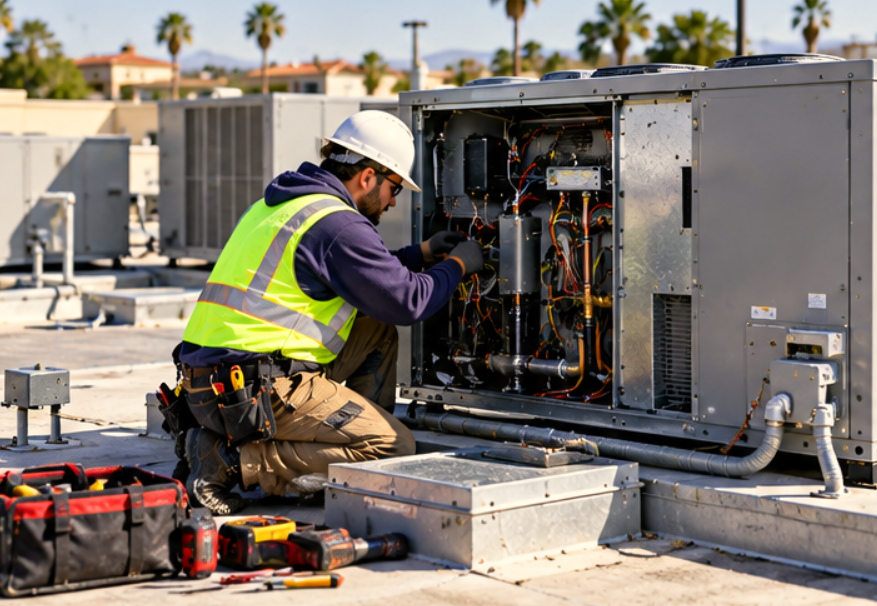
A retail rooftop unit is almost always packaged, meaning the compressor, condenser, evaporator and blower share one weatherproof cabinet. A house usually runs a split system, with the condenser outside and the air handler indoors, which is a far simpler thing to replace.
Putting everything in one box raises the equipment cost, and putting that box on a roof adds a crane, rigging and structural considerations a residential swap never touches. The unit has to be set, leveled and sealed to a curb, then tied into existing ductwork from above rather than from a closet.
That design exists because commercial duty is heavier and more continuous than residential. A retail bay runs its system through trading hours on every hot day, which is why these units are built differently and why the install details are where cost and callbacks tend to hide.
How Do You Size HVAC for a Retail Space?
Sizing HVAC for a retail space requires more than estimating square footage. In a Modesto strip mall, storefront glazing, customer traffic, lighting, ceiling height, and tenant equipment can all affect cooling demand. A proper load calculation helps determine the capacity needed for the finished space without paying for equipment that is larger than necessary.
Square Footage as an Initial Estimate
A rough planning guideline of 350 to 450 square feet per ton may suggest a starting point for a 2,000-square-foot retail unit. However, that estimate can change significantly with storefront glass, roof exposure, occupancy, and internal equipment loads. Use square footage for preliminary budgeting, not as the final basis for equipment selection.
Factors Included in a Load Calculation
A professional load calculation evaluates the building envelope and the heat generated inside the space. For retail units, that includes insulation, window orientation, lighting, occupancy, equipment, and frequent door openings. Modesto’s hot summer weather also makes solar heat gain and the condition of the roof particularly important when estimating peak cooling demand.
Problems Caused by Oversized Equipment
An oversized HVAC system can reach the thermostat setting quickly and shut off before running long enough to manage indoor humidity effectively. Frequent cycling may also increase equipment wear and create uneven temperatures. Selecting the correct capacity helps balance cooling performance, humidity control, operating costs, and comfort for both customers and employees.
How the Tenant Build-Out Affects HVAC Capacity
An empty retail shell has different heating and cooling requirements from a finished restaurant, salon, or specialty store. New partitions, commercial lighting, cooking equipment, refrigeration, and higher occupancy can all change the load. HVAC sizing should therefore account for the tenant’s planned use and final layout before equipment is ordered or installed.
Before replacing equipment in a Modesto strip mall unit, confirm the expected tenant layout, equipment loads, ductwork condition, and required cooling capacity. These details also affect project costs.
What Hidden HVAC Replacement Costs Catch Landlords Off Guard?
The equipment line is the one landlords budget for, and the rest is where tenant-improvement allowances quietly get eaten. None of the items below are unusual or avoidable on an older center, which is why a bid that omits them is not a lower bid so much as an incomplete one waiting to be revised upward:
- Curb adapter where the new cabinet footprint does not match the existing roof curb
- Crane and rigging to lift the old unit off and set the replacement
- Electrical disconnect at or near the unit, where code requires one and none exists
- Condensate drain correction to meet current drainage requirements
- Seismic strapping or structural work where the install triggers it in California
- Duct transitions where the new cabinet openings differ from the old
Many Modesto strip centers were built decades ago with curbs sized to the equipment of that era, so a new unit rarely drops onto an existing curb cleanly. The adapter is a routine line item here rather than an unusual one, and a bid that omits it is probably incomplete.
The disconnect is the other frequent surprise. It is the safety switch that lets a technician cut power at the unit, and where the original install predates the requirement it gets added mid-job. Ask about curb fit and the disconnect before you accept any number as final.
Should You Repair or Replace a Rooftop Unit Before a New Tenant Moves In?
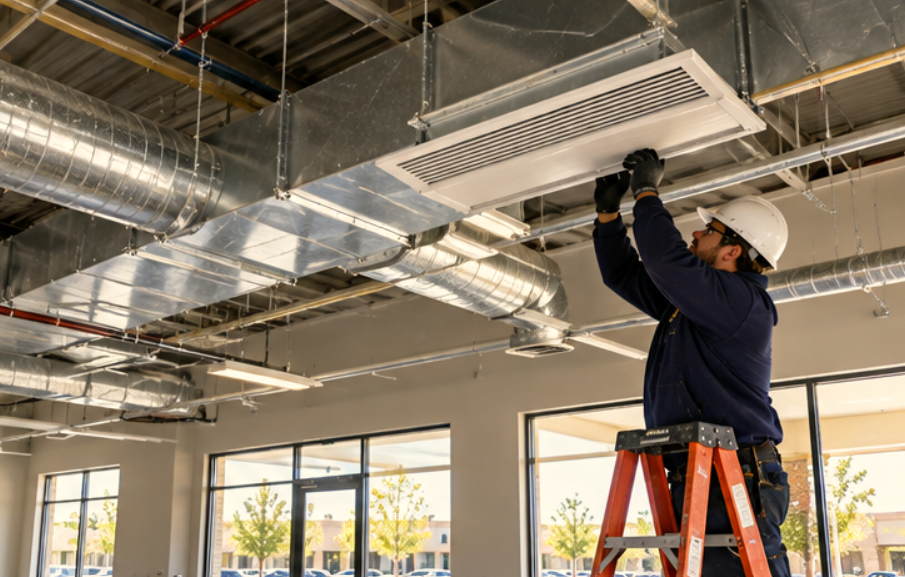
Commercial packaged units generally last 15 to 20 years under Central Valley duty, so age frames this more than the specific fault does. The vacancy itself is the other half of the decision, because an empty bay is the cheapest access you will ever have.
| Situation | Lean toward | Why |
|---|---|---|
| Under 15 years, one failed part | Repair | A component fix restores a unit with years left |
| 15 to 20 years, minor fault | Judgment call | Weigh repair cost against remaining run hours |
| Near end of life, major failure | Replace | Compressor or coil cost approaches a new unit |
| Vacant bay before a new tenant | Replace | Roof and bay are clear, nobody is trading underneath |
An emergency changeout during occupancy costs more than the same work in a vacancy, and it costs the tenant trading days on top. Our post on why commercial HVAC systems fail in hot weather covers why those failures cluster in exactly the weeks you least want them.
What Should a Landlord Look for on an HVAC Replacement Quote?
A lump sum tells you almost nothing and makes two bids impossible to compare against each other. A quote worth considering separates the work into its parts, so you can see where the money goes and judge which contractor has priced the roof from experience rather than from an optimistic guess.
- Equipment make, model, tonnage and efficiency rating
- Curb adapter or any curb rework, priced rather than assumed
- Electrical work and the disconnect
- Crane and rigging, stated as its own line
- Permit and inspection fees, with confirmation of who pulls the permit
- Startup and commissioning, plus the load calculation the sizing came from
Confirm the permit question directly. California commercial changeouts generally require a permit and inspection through the local building department, and an HVAC contractor who handles that paperwork routinely will name the jurisdiction without hesitating. Booking commercial maintenance on the new unit from day one also protects the warranty.
Frequently Asked Questions About Strip Mall HVAC Replacement
Does the landlord or the tenant pay for the replacement?
It depends on the lease. A triple-net lease commonly puts HVAC on the tenant while a gross lease keeps it with the landlord, and many leases split repair from replacement. Confirm the unit’s age and condition in writing before signing, so a failing rooftop unit does not become a first-month surprise.
How long does a rooftop changeout take?
A straightforward swap onto an existing curb usually takes one to two days, covering the crane set, electrical reconnection and startup. A curb adapter, an electrical upgrade or waiting on an inspection slot can add days, and roof access on a tight retail site sometimes dictates the schedule more than the work does.
Can I replace the unit while the tenant is trading?
Yes, though it costs more and reads worse. Occupied changeouts usually mean after-hours or weekend crane work, temporary roof protection and a closed section of parking lot for the lift. Doing the same job during a vacancy avoids all three, which is why turnover is the window worth using.
Will the new refrigerant rules raise what I pay?
Equipment built from 2025 uses A2L refrigerants such as R-454B as R-410A is phased down. Supply has largely settled, but matching new equipment to an older line set is not always possible, and where it is not, that work appears as an extra line rather than a surprise at the end.
Should I replace all the units on the center at once?
Not usually in one go, though staging matters. Replacing several at a time shares the crane mobilization across units, which is a genuine saving. Replacing units that still have five good years left to capture that saving rarely pays, so the sensible plan groups the units already near end of life.
Why Choose Dycus Heating and Air Conditioning for Strip Mall HVAC Replacement in Modesto, CA?
Replacing HVAC equipment in a commercial retail unit requires accurate sizing, careful planning, and an understanding of rooftop installation requirements. Dycus Heating and Air Conditioning has served the Modesto area since 2001, with NATE-certified technicians and Daikin VRV certification for applicable commercial systems.
Our commercial HVAC team can help you evaluate replacement options, coordinate installation requirements, and understand project costs before committing to a schedule. We also provide commercial HVAC maintenance to help property managers keep equipment operating reliably between tenant turnovers and identify potential issues before they disrupt business operations.
If you are preparing a strip mall unit for a new tenant, call (209) 544-8072 or explore our commercial HVAC installation and replacement services to discuss your project. We can help you plan the replacement around the space’s cooling needs and installation requirements.