 Skip to content


Light Commercial HVAC
Serving Modesto, Manteca and Riverbank in the Central Valley
Light Commercial HVAC That Keeps You Open
A small shop or office usually runs on one or two units, with no backup behind them. Light commercial HVAC in Modesto keeps those smaller systems ready for the lunch rush, from split systems and compact rooftop units to ductless mini-splits.
Dycus Heating and Air Conditioning keeps this gear running for shops, cafés and rental units in Modesto and nearby towns. We repair it, replace it and maintain it. Every job is also quoted for the size of the building and the hours it keeps.

365Days Availability
100%Local Technicians
25Years of Experience
48%Share of U.S. commercial buildings that are 1,001 to 5,000 square feet, according to EIA's 2018 building survey.
8%Share of commercial energy those small buildings use, which is why each unit's efficiency matters to the owner paying the bill.
5%Share of U.S. commercial buildings that used a smart, internet-connected thermostat in 2018, as EIA reported.
40%Share of energy that U.S. food service buildings spend on cooking, per EIA. That heat lands on the cooling system.
The Equipment Small Buildings Run On
Most shop and small office HVAC in Modesto runs on one of the systems below. Knowing which one you have tells us how to service it.
Split Systems
A split system pairs an outdoor condenser with an indoor furnace or air handler, and it's common in small offices and in suites inside larger buildings. A business day of ten hours or more puts extra run time on it, so filters and coils load up faster than the calendar suggests.
Compact Rooftop Units
One cabinet on the roof heats and cools a storefront or small office, which frees floor space for stock and keeps the noise away from customers. Many small roofs carry just one, so keeping that unit healthy keeps the whole space open.
Ductless Mini-Splits for Single Rooms
Mini-splits are wall or ceiling units that need no ductwork, and each one has its own setting. They cool the back office over the kitchen, the add-on room or the closet full of computer gear without reworking the ducts the main system uses.
Heat Pump Systems
A heat pump runs one system for both seasons, using the same refrigerant loop to cool in summer and warm the space in winter, with no gas line needed.
Zoning for Divided Spaces
Zoning splits one system so a sunny front room and a shaded back office each get their own setting. It ends the tug-of-war between staff who work in different parts of the space.
Kitchen Ventilation and Make-Up Air
A restaurant hood pulls air out of the building, and the make-up air system brings fresh air back in. When that balance slips, doors get hard to open and the dining room runs warm.
If something stops working, start with commercial HVAC repair. If the equipment is near the end of its life, we'll price a replacement sized to your space instead.
What Light Commercial HVAC Repair Costs
The diagnostic is a flat $169. What comes after depends on the failed part, how hard the unit is to reach and the hours the fix takes.

A small shop with one rooftop unit and a busy café with three mini-splits get very different quotes, each built from that space's equipment.
Light Commercial or Larger Commercial HVAC
Matching the Visit to the Building
The line between the two comes down to size, equipment and how many people the system serves. A 2,000-square-foot shop and a three-story office block are both commercial, yet they need different visits.
Knowing which side you're on keeps you from paying for work the building doesn't need. We cover both, from a café's split system to Daikin VRV systems in office blocks.
| Light Commercial | Larger Commercial | |
|---|---|---|
| Typical buildings | Storefronts, small offices, cafés, rental units | Office buildings, schools, multi-tenant centers |
| Typical size | Often under 5,000 square feet | Tens of thousands of square feet |
| Typical equipment | Split systems, compact rooftop units, mini-splits | Large rooftop units, chillers, cooling towers, VRF |
| Common trouble | Clogged filters, worn start parts, oversized units that short cycle | Controls, zone balance across floors, chilled-water loop upkeep |
| Upkeep rhythm | Quarterly visits on an agreement | Quarterly visits plus chiller, tower and controls checks |
| Where to start | You're on it | Our commercial HVAC services overview |
What Small Businesses Get From Us
Practical Help Sized to Your Space
A Plain Report Each Visit
Most small businesses don't have a facilities manager. So after each visit, your technician tells you what was checked, what's wearing out and what can safely wait.
Thermostats Set to Business Hours
We install and set up smart thermostats for small commercial systems. Once they match your open and close times, the system stops cooling an empty building at night.
15% Off Repairs on Agreement
Shops and offices on our quarterly maintenance agreement take 15% off repairs. Each visit checks the filters, coils and start parts that wear fastest when a small system runs from open to close.
From Phone Call to Cool Office
Every small business service call runs the same way, so you can plan your day around it.
-
List your units and symptoms
Call from 7 AM on weekdays or book online. Tell us the business type, how many units serve the space and what changed.
-
We test on site
A technician checks every unit that serves your space and pins down the part that failed.
-
You choose the fix
You see the repair or replacement cost and approve the one that suits your space before work begins.
-
Next check on the calendar
If you join our maintenance agreement, we book your first upkeep visit before we leave, so the schedule starts on a set date.
Book a Visit Around Your Rush
Tell Us Your Busiest Hours
Mention your peak times when you call. Our office books the visit around them whenever the schedule allows, and a café that loses its cooling during the morning rush can often see a technician that same day. Weekend breakdowns can still reach us, since calls go to the technician on duty until 9 PM.
-
Know Which Unit Is Yours
Shops in a shared center often share a roof or a utility closet. Know which unit serves your space, or who holds the closet key, so the visit starts on time.
-
Write Down When It Started
Jot down the day it started and what you noticed, like warm air, a new noise or a unit that keeps cycling. Those notes help your technician get to the cause sooner.
The Towns on Our Service Map
Our technicians cover small businesses in fifteen towns across Stanislaus and San Joaquin counties. In each one, a shop can book a repair or a replacement with one call. For shops more than a 20-mile drive from Modesto, an out-of-area fee applies, and we'll say so up front.
Why Customers Keep Our Number Handy
In their own words, posted on Google.
"Dycus is our go-to for anything HVAC."

Cheri N., Google review
"Superb service. Very reliable."

JC A., Google review
"The Dycus team including office staff are professional and trustworthy."

Ron D., Google review
Upkeep Tips for Shop Owners
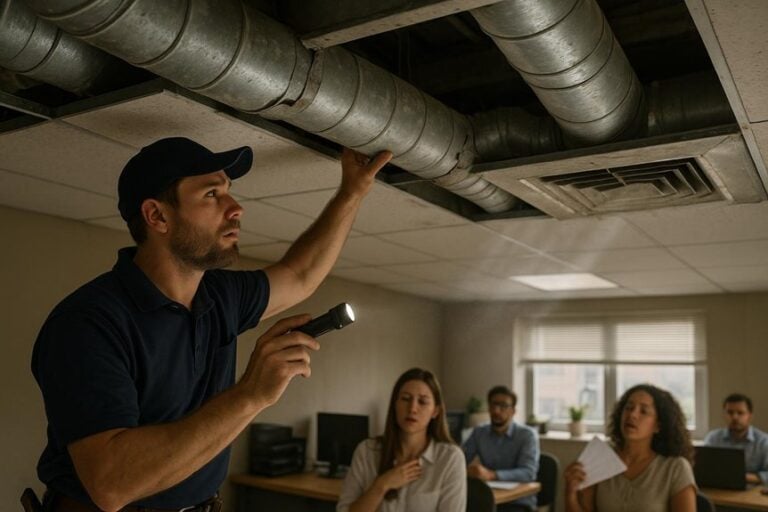
Our commercial HVAC maintenance post shows what upkeep does for a small shop. It cuts energy waste, delays replacement and keeps staff comfortable on long shifts. Browse the blog →
Small Business HVAC Questions We Hear
Can I use residential HVAC equipment in a commercial building?
Sometimes, in small spaces. But the building still has to meet commercial code. That usually means fresh air for the people inside and extra energy features on bigger units, so have both checked before anything goes in. Some brands also shorten the warranty for business use.
Why is my small office too cold in summer?
Most often the thermostat sits in the wrong spot, the unit is too large, or the airflow isn't balanced between rooms. A large unit cools the room quickly, then stops before it can pull moisture out. So the air feels cold and clammy.
Can one HVAC unit serve two tenant spaces?
It can, but it causes trouble. One tenant ends up setting the temperature for both, and splitting the bill gets messy. Separate units, or one system split into zones, give each tenant their own control. Zoning can be the lower-cost route when the ducts already reach both spaces.
Do I need a permit to add a mini-split to my business?
Usually, yes. California generally requires a mechanical permit for new HVAC equipment, and the electrical connection may need its own sign-off. A licensed contractor can handle the paperwork with the install. Keep the final inspection record with your building files, since a landlord or buyer may ask for it.
What size HVAC unit does a small office need?
A load calculation gives the right answer, because sun exposure, staff, office equipment and open hours all add heat. A west-facing office full of monitors can need more cooling than an inside room of the same size. We run those numbers for each space before we recommend a unit.