 Skip to content

Commercial HVAC Repair
Serving Modesto, Manteca and Riverbank in the Central Valley
Year-Round Commercial HVAC Repair in Modesto
Commercial HVAC repair in Modesto gets your building back to work. The rooftop unit might quit on a July afternoon or a cold January morning. Either way, staff, customers and stock feel it long before anyone climbs to the roof. So the first visit has to find the fault.
Dycus Heating and Air Conditioning repairs heating and cooling for offices, shops, schools and rental properties across the Modesto area. We trace each fault to the failed part. That might be a gas valve, a fan motor or the compressor itself.

365Days Availability
100%Local Technicians
25Years of Experience
55%Share of air-conditioned U.S. commercial buildings that use packaged units, rooftop units included, according to EIA's 2018 survey.
32%Share of all commercial building energy that goes to space heating, the largest single use, per EIA.
2020The year U.S. production of R-22 refrigerant ended, per the EPA phaseout schedule.
Up to 30%Energy commercial buildings can lose to inefficiencies, according to ENERGY STAR.
Commercial HVAC Faults and What Causes Them
Most commercial HVAC repair in Modesto starts with something staff notice first, like a warm room, a noise or a smell. Many calls end up as a rooftop unit repair, and naming the failed part early keeps the job small.
Rooftop Unit Blowing Warm Air
The fan runs, yet the air never cools. A weak capacitor, the part that helps the compressor start, a refrigerant leak or an outdoor fan that quit spinning are the usual culprits. A few quick tests tell them apart.
Breaker Trips at Compressor Startup
A breaker that trips at startup often means the compressor is pulling too much power, or a fan motor or start capacitor has failed. Resetting it again and again can ruin the compressor, so leave it off after a second trip and call.
Gas Heat Won't Light
Many rooftop units heat with gas. When the burners won't fire, the cause is usually the igniter, the flame sensor or a safety switch doing its job, and each one has a quick test.
Unit Cycles On and Off
Short cycling wears out a compressor fast. Dirty filters, low refrigerant, a thermostat in direct sun or a unit that's too big for the space can all set it off.
Water Dripping Through the Ceiling
Every cooling system makes water. A clogged drain line or a cracked drain pan sends it into the ceiling tiles instead of off the roof, and clearing it early protects the tiles, the drywall and whatever sits below.
Grinding or Squealing Overhead
Metal-on-metal grinding usually means worn fan motor bearings. A high squeal often comes from a belt slipping on its pulley. Both get louder before they fail, which buys you time to call.
Behind most of these faults sits one worn part. When the same unit keeps showing up on this list, a commercial HVAC replacement can end the repeat calls. For a unit worth keeping, our quarterly commercial maintenance agreement puts a technician on the roof to check these same parts before they fail.
What Sets a Commercial Repair Bill
Why does one rooftop repair cost far less than another? The failed part decides most of it. A capacitor is a small fix, while a compressor is the biggest job on the unit.
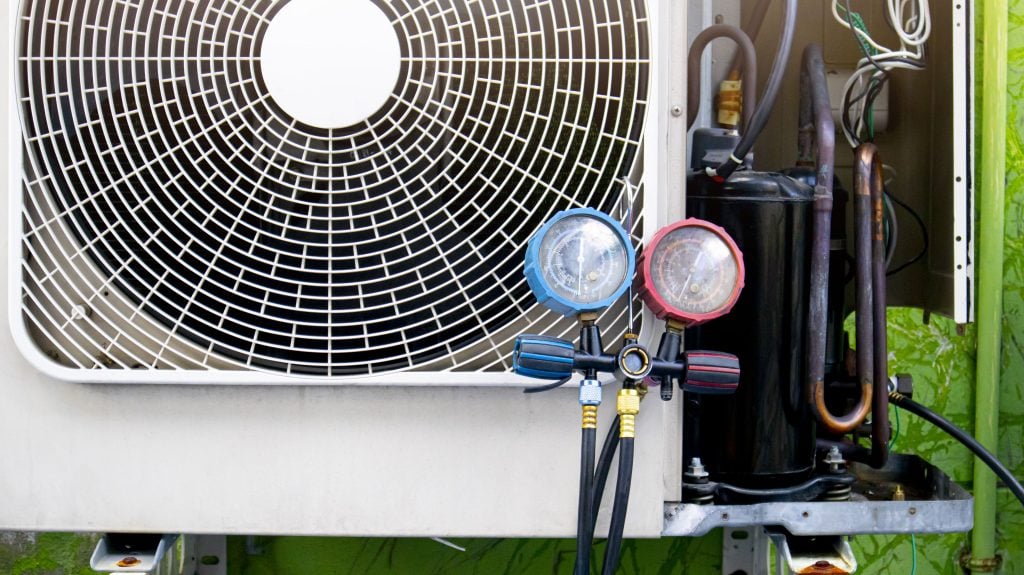
Each commercial HVAC repair in Modesto begins with a $169 diagnostic that ends with the failed part named and the repair priced. From there, access and refrigerant move the number. A unit that needs a crane, or one that still runs on R-22, costs more to fix.
You'll see the repair price before any part gets ordered. When the numbers lean toward a new unit, you'll get a replacement quote to weigh against the repair.
Early Repair Versus Running It to Failure
We Fix Small Faults Before They Spread
A squealing belt or a weak capacitor is a short visit today. Left alone, it can take the compressor down with it. Technicians from Dycus Heating and Air Conditioning point out worn parts they spot, so you can fix them on your schedule.
| Early Repair | Run It Until It Stops | |
|---|---|---|
| When it happens | On a weekday you choose | Often under peak load, like a 100°F afternoon |
| What gets replaced | The worn part alone | The worn part plus whatever it damaged |
| Your business that day | Usually stays open while we work | Warm rooms for staff and customers until the fix |
| The bill | One part and one visit | Bigger parts and more labor |
Why Facility Managers Call Us for Repairs
Built to Cut Downtime and Return Trips
Live Supplier Pricing on Parts
Our pricing system links to supplier warehouses, so your quote uses today's part prices. We can also check stock before we book the repair. That saves you a second trip.
Breakers and Compressors on One Call
A tripping breaker can point to the panel or to the compressor behind it. We repair breakers and electrical panels as well as HVAC gear. So one technician checks both sides, and you skip a second contractor.
Leaks Fixed Before Any Recharge
Topping off refrigerant without fixing the leak means paying to refill it later. We find and fix the leak first, then charge the system to spec. You pay for refrigerant once.
From First Symptom to Final Test
Every commercial HVAC repair visit in Modesto follows the same four steps, so you always know what's next.
-
Book the repair
Our office takes calls from 7 AM to 5:30 PM on weekdays, or you can use the booking form. Mention the symptom and where the unit sits.
-
We diagnose on site
Your technician tests the unit, finds the failed part and shows you what went wrong.
-
You approve the price
You get the repair price and how long the fix should last, ready to share with whoever approves the spend. Work begins once you say yes.
-
We repair, restart and review
With the new part in, we cycle the unit on and off, confirm it holds temperature and tell you what we replaced.
Get a Repair Technician on the Roof
Weekday Repairs Start With an Early Call
Same-day commercial HVAC repair in Modesto is available Monday through Friday. That covers commercial air conditioning repair and heating calls alike. Call before mid-morning, and an office with a dead rooftop unit can often have cool air again that afternoon. On Saturdays and Sundays, a technician stays on call until 9 PM.
-
Keep the Roof Access Clear
Unlock the roof hatch or ladder cage before we arrive, and share any gate codes. Quick access to the unit means the clock starts on the repair, not on the search.
-
Note What the Thermostat Says
Error codes, a blank screen or a setting someone changed are all useful clues. Snap a photo of the thermostat before you call, and read us what it shows.
Where Our Repair Technicians Work
Booking works the same from any town below. Share the street address and where the unit sits, and our office sets the visit on that same call. Addresses past our usual 20-mile radius add an out-of-area fee, which we quote on that call.
What Customers Noticed on Their Service Calls
Here's what customers posted on Google after their service calls.
"Most recently was just a service on a rental property but the tech did a thorough inspection and service, then called me directly. He advised me of the condition of the unit and made reasonable recommendations for its ongoing functionality."

Ron D., Google review
"Maintenance is done regularly and when service is needed, they always expedite and get it fixed in short notice."

Herb C., Google review
More Commercial HVAC Answers on Our Blog

If your building is leased, our post on how California commercial leases split HVAC costs walks through the clauses that decide what the landlord covers and what falls to the tenant. Repairs are one part of our commercial HVAC services, which also cover maintenance, replacement and new construction. Browse the blog →
Facility Manager Questions on Commercial HVAC Repair
Why is my commercial rooftop unit freezing up?
Ice on the coil usually means the airflow or refrigerant flow is off, from a clogged filter, a weak blower or low refrigerant. Switch the unit to fan only so the ice melts, then call. Running it frozen can damage the compressor.
How long does a commercial HVAC repair take?
Many repairs, like a capacitor, a fan motor or an electrical switch, finish in one visit. A compressor swap or a part that has to be ordered can take a few days, and a heavy component may need a crane to reach the roof.
Why is one side of my building hotter than the other?
Uneven temperatures usually come from airflow, not the unit itself. A stuck damper, a leaky or undersized duct run, or a thermostat in the wrong room can leave one side behind. Buildings with several rooftop units can also have one unit quietly failing.
Why does my commercial heater smell like burning?
A dusty smell in the first minutes of the season is dust burning off the heat exchanger, and it fades quickly. A smell that lingers, or smells like hot plastic or wiring, means shut the system off and book a commercial heating repair.
Who pays for HVAC repairs in a commercial lease?
The lease decides. Triple-net leases often put HVAC repair and maintenance on the tenant, while gross leases usually leave it with the landlord. Check the HVAC clause in your lease before you book, and keep the invoice for your records.