Skip to content
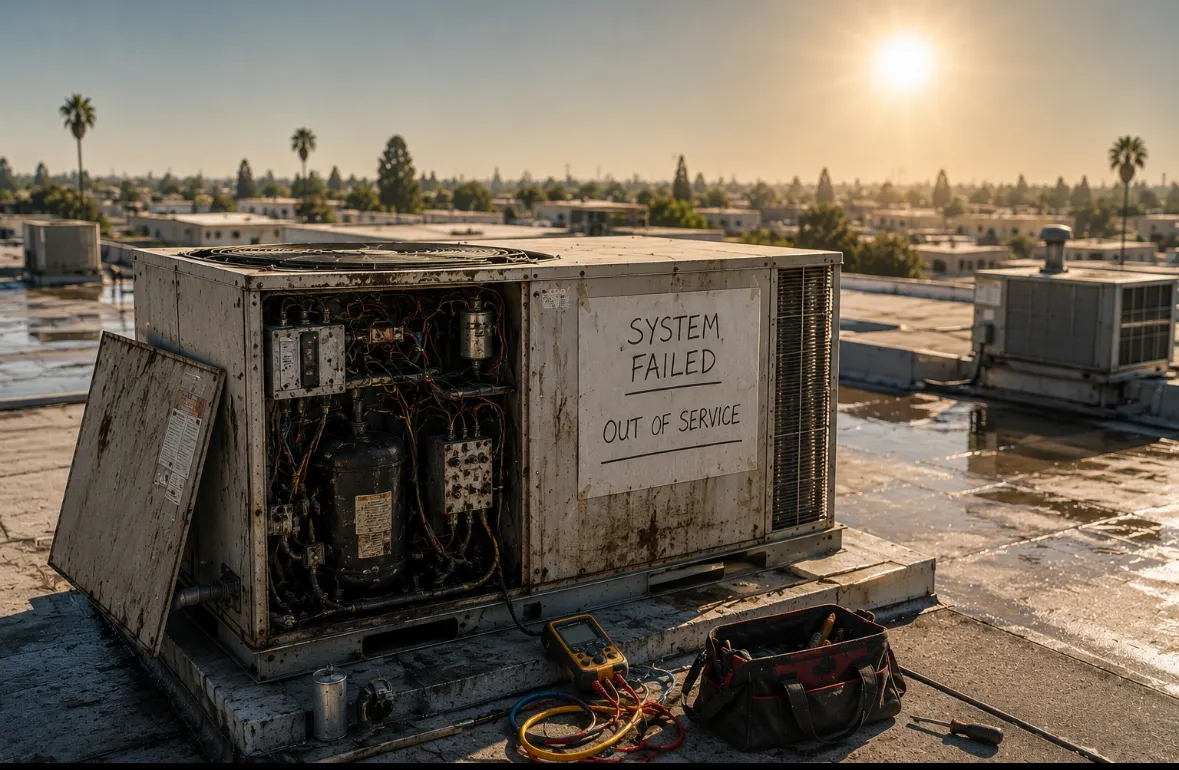
When your commercial HVAC system fails in the middle of summer, it affects far more than indoor comfort. Employees become less productive, customers may leave sooner, and temperature-sensitive equipment can be put at risk. In Modesto, commercial rooftop units often operate for extended hours during the hottest months, which exposes weak components and deferred maintenance issues.
Most breakdowns do not happen suddenly. Business owners usually notice warning signs such as uneven cooling, longer run times, or rising utility costs weeks before the system shuts down. Understanding the most common causes of commercial HVAC failure can help you schedule service early and avoid costly interruptions during peak cooling season.
Why Commercial HVAC Systems Fail in Modesto’s Summer Heat

Commercial HVAC systems in Modesto operate under some of the toughest cooling conditions in California’s Central Valley. Summer temperatures regularly climb into the triple digits, and rooftop package units installed on warehouses, retail centers, medical offices, and restaurants are exposed to direct sun for most of the day. Rooftop surfaces can exceed 140°F, which places continuous stress on compressors, condenser fan motors, and electrical components.
Many commercial buildings in Modesto were constructed with large open floor plans, high ceilings, and extensive glass exposure that increase afternoon heat gain. In older properties, aging ductwork and deferred maintenance can further reduce airflow and cooling capacity.
California Title 24 energy standards require commercial HVAC systems to operate efficiently, but dirty coils, restricted filters, and worn electrical parts can prevent equipment from meeting expected performance.
- Triple-Digit Heat – Extreme outdoor temperatures place heavy demand on rooftop cooling systems.
- Rooftop Exposure – Direct sunlight raises operating pressures and component temperatures.
- Central Valley Dust – Airborne debris coats condenser coils and restricts heat transfer.
- Large Buildings – Warehouses and retail spaces require longer and more demanding cooling cycles.
- Title 24 Standards – Efficient airflow and equipment performance are critical for energy control.
Scheduling professional commercial HVAC repair before summer helps identify these issues before they disrupt your business.
Top Mechanical Causes of Rooftop AC Failure During Heat Waves
Most commercial cooling failures can be traced to a handful of mechanical problems. Dirty condenser coils prevent the system from releasing heat efficiently, while refrigerant leaks reduce cooling capacity and increase compressor strain. Clogged filters and worn blower motors can further restrict airflow throughout the building.
These issues often develop gradually and may go unnoticed until occupants begin reporting hot zones or inconsistent temperatures. In many service calls, technicians find that one neglected component has forced the entire system to work harder for weeks. Preventative commercial HVAC maintenance helps detect these problems before they lead to expensive downtime.
- Dirty Coils – Heat remains trapped, causing high pressures and reduced efficiency.
- Refrigerant Loss – Lower cooling capacity forces the compressor to overwork.
- Clogged Filters – Restricted airflow reduces comfort across the building.
- Blower Wear – Weak airflow affects offices, retail areas, and workspaces.
- Compressor Stress – Prolonged overheating can trigger a complete shutdown.
How Airflow Restrictions and Dirty Coils Overload Your System

Airflow and heat transfer are critical to commercial HVAC performance. When filters become clogged or ductwork is restricted, the system cannot deliver enough conditioned air to occupied spaces. At the same time, dirty condenser coils prevent the rooftop unit from rejecting heat efficiently.
This combination causes compressors and fan motors to run longer while consuming more electricity. Business owners often notice conference rooms that stay warm, uneven temperatures between zones, or higher summer energy bills.
- Hot Zones – Certain areas remain warmer despite continuous operation.
- Long Cycles – Equipment runs longer to reach thermostat settings.
- Higher Bills – Electrical costs increase as efficiency declines.
- Occupant Complaints – Employees and customers notice inconsistent comfort.
- Frequent Repairs – Temporary fixes become more common as strain increases.
Electrical Problems That Shut Down Commercial AC Units
Electrical failures are one of the most common causes of sudden commercial HVAC shutdowns during summer. In rooftop units, capacitors, contactors, relays, and wiring connections are exposed to continuous heat and vibration. As these components age, they may test within range during mild weather but fail once the system starts cycling heavily during peak cooling demand.
During commercial service calls, technicians often find capacitors reading 10–20% below their rated microfarads or contactors with severely pitted contacts. These parts may still allow the unit to start intermittently, but they can fail without warning and stop cooling to the entire building. Prompt commercial HVAC repair helps identify electrical wear before it leads to downtime.
- Weak Capacitors – Compressors and fan motors struggle to start.
- Worn Contactors – Electrical connections become unreliable under load.
- Loose Wiring – Heat buildup can cause intermittent shutdowns.
- Breaker Trips – Overloaded circuits interrupt cooling unexpectedly.
- Control Failures – Thermostats and boards stop communicating properly.
Uneven Cooling and What It Means for Your Business
Uneven cooling is often the first indication that a commercial HVAC system is struggling to keep up with building demand. You may notice conference rooms that stay warm, retail areas with noticeable hot spots, or offices that never reach the thermostat setting. In our experience, these issues are commonly caused by restricted airflow, low refrigerant, failing blower motors, or zone control problems that worsen during heavy summer operation.
For business owners, inconsistent temperatures affect more than occupant comfort. Employees may become less productive, customers may shorten their visits, and temperature-sensitive equipment can be exposed to unstable conditions. In many commercial buildings, correcting airflow imbalances and addressing underlying HVAC issues restores comfort without requiring a full system replacement.
| Business Symptom | Likely HVAC Cause | Operational Impact |
|---|---|---|
| Warm offices | Poor airflow or blower issues | Reduced employee productivity |
| Retail hot spots | Duct imbalance or low refrigerant | Shorter customer visits |
| High humidity | Inadequate moisture removal | Uncomfortable indoor conditions |
| Server room temperature swings | Cooling capacity problems | Risk to sensitive equipment |
| Frequent tenant complaints | Uneven zone performance | Increased service requests |
If different areas of your building are no longer cooling consistently, a professional commercial HVAC inspection can identify the root cause and help restore balanced, reliable comfort throughout your facility.
Unusual Noises, Odors, and Rising Energy Bills
Commercial HVAC systems often provide clear warning signs before a major failure occurs. Grinding noises may indicate motor bearing wear, burning odors can signal overheating electrical components, and musty smells often point to moisture buildup in drain pans or ductwork. Rising utility costs are another strong indicator that the system is working harder than necessary.
- Grinding Sounds – Bearings and motors may be nearing failure.
- Burning Smells – Electrical parts can overheat under heavy load.
- Musty Odors – Moisture buildup may affect indoor air quality.
- Higher Bills – Efficiency losses increase monthly operating costs.
- Frequent Cycling – Controls may be struggling to regulate temperatures.
Many business owners notice a 15–30% increase in summer electricity usage before calling for service. In our experience, these spikes are commonly linked to dirty coils, refrigerant issues, or malfunctioning controls. Scheduling professional commercial HVAC repair early can prevent more expensive component failures.
The Value of Preventive Maintenance Before Summer Peaks

The most reliable way to prevent commercial HVAC breakdowns is through scheduled maintenance before cooling demand reaches its highest level. A thorough inspection includes coil cleaning, refrigerant testing, electrical diagnostics, filter replacement, and airflow measurements. These services help identify worn components before they fail during business hours.
- Early Detection – Hidden issues are found before major failures occur.
- Lower Costs – Efficient systems consume less electricity.
- Fewer Emergencies – Planned service reduces unexpected downtime.
- Longer Lifespan – Equipment experiences less mechanical stress.
- Better Comfort – Consistent temperatures support employees and customers.
Well-maintained rooftop units operate more efficiently, experience fewer emergency repairs, and often last several years longer than neglected systems. For many businesses, preventative maintenance also reduces the risk of lost revenue caused by uncomfortable indoor conditions. Investing in routine commercial HVAC maintenance is one of the most cost-effective ways to protect your building.
Why Choose Dycus Heating and Air Conditioning in Modesto, CA

Commercial HVAC failures can disrupt operations, increase expenses, and create an uncomfortable environment for employees and customers. Addressing warning signs early and investing in preventative maintenance helps protect both your equipment and your business.
Dycus Heating and Air Conditioning has provided Commercial HVAC repair and maintenance services in Modesto for more than 25 years. Our technicians understand the demands placed on rooftop units throughout the Central Valley and focus on practical solutions that improve reliability, efficiency, and long-term system performance.