Skip to content
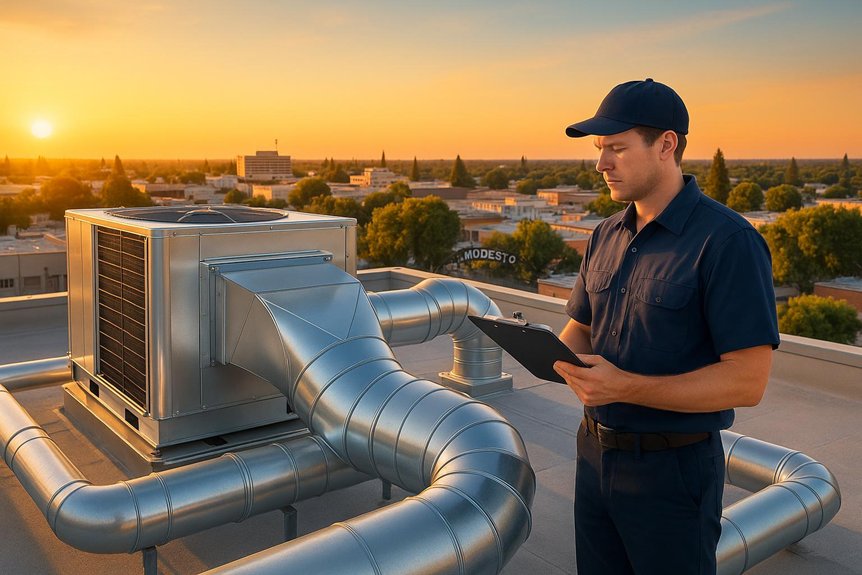
If your commercial HVAC system has not been inspected since last cooling season, summer is not the time to wait and see how it performs. In Modesto, rooftop units work under intense heat, heavy dust, and long daily operating hours. A clogged filter, weak capacitor, or low refrigerant charge may seem minor in spring but can quickly lead to uncomfortable offices, customer complaints, and expensive downtime once cooling demand increases.
Preparing your HVAC system before summer gives you the opportunity to identify hidden problems while repairs can still be scheduled on your terms. For business owners, this means fewer emergency calls, more predictable operating costs, and a more comfortable environment for employees and customers. Read the sections below to understand the most important components and warning signs every Modesto business owner should check now to ensure their commercial HVAC system is ready for summer.
Why Summer HVAC Preparation Matters for Modesto Businesses

If your commercial HVAC system is not fully prepared before summer, the first major heat wave can expose problems that have been developing for months. In Modesto, office buildings, medical clinics, retail stores, restaurants, and warehouses depend on rooftop units to maintain consistent temperatures during long business hours. When cooling performance drops, it can affect employee productivity, customer comfort, and even temperature-sensitive equipment.
Summer preparation allows you to identify worn components, airflow issues, and efficiency losses before they lead to emergency repairs. In our experience, many commercial systems that fail in July had early warning signs in spring, such as uneven cooling, delayed startup, or rising energy costs. Scheduling professional commercial HVAC maintenance gives business owners the opportunity to address these issues before peak demand arrives.
- Operational Protection – Prevent unexpected breakdowns during critical business hours.
- Energy Savings – Restore efficiency before cooling costs increase.
- Comfort Control – Maintain consistent temperatures across all occupied areas.
- Equipment Longevity – Reduce stress on compressors and electrical components.
- Budget Planning – Handle repairs proactively instead of during emergencies.
Airflow Problems and Dirty Filters That Reduce Cooling Performance
One of the most important items to check before summer is whether your HVAC system is moving the correct volume of air throughout the building. In Modesto, filters in warehouses, retail stores, and manufacturing facilities can become heavily loaded with Central Valley dust within 30 to 90 days, depending on operating conditions. Once airflow is restricted, rooftop units run longer, cooling becomes uneven, and blower motors work harder to maintain comfort.
During commercial maintenance visits, technicians often find filters so clogged that static pressure rises well above the manufacturer’s recommended range. This extra resistance reduces airflow to offices, conference rooms, and customer-facing areas, while increasing wear on belts, bearings, and fan motors. In some buildings, replacing neglected filters and correcting airflow restrictions can reduce cooling runtime and noticeably lower energy costs during the summer.
- Weak Supply Air – Air volume at diffusers feels noticeably lower than it did earlier in the season.
- Warm Interior Zones – Offices farthest from the rooftop unit remain several degrees warmer in the afternoon.
- Noisy Return Grilles – Excess suction noise indicates the system is struggling to pull adequate airflow.
- Extended Run Cycles – Equipment operates for hours with little improvement in indoor temperature.
- Occupant Complaints – Employees and customers report stuffy rooms and inconsistent comfort.
If these symptoms are appearing before summer begins, professional commercial HVAC repair can identify airflow restrictions, restore system efficiency, and help your building stay comfortable during Modesto’s hottest months.
Condenser Coils and Refrigerant Issues That Increase System Strain

Condenser coils and refrigerant levels have a direct impact on how efficiently your HVAC system removes heat from the building. Dirty coils coated with dust and rooftop debris reduce heat transfer, forcing compressors to operate under higher pressures. Low refrigerant can further reduce cooling capacity and cause certain areas to fall behind during busy afternoons.
These issues often develop gradually, which is why many business owners notice higher utility bills before they notice a comfort problem. During commercial tune-ups, technicians commonly uncover partially blocked coils and refrigerant levels that are below manufacturer specifications. Correcting these conditions before summer helps improve cooling performance and lowers the risk of compressor failure.
| What You Notice | Likely Cause | Impact on Your Business |
|---|---|---|
| Longer cooling cycles | Dirty condenser coils | Increased energy costs |
| Uneven temperatures | Low refrigerant | Reduced occupant comfort |
| Ice on refrigerant lines | Charge or airflow issue | Risk of equipment damage |
| Rising utility bills | Reduced system efficiency | Higher operating expenses |
Routine commercial HVAC maintenance includes coil cleaning and refrigerant testing to prepare your system for peak summer conditions.
Electrical Components and Thermostat Controls That Need Inspection
Electrical components are one of the most common causes of unexpected commercial HVAC shutdowns during the summer. In Modesto, rooftop units often run for 10 to 16 hours a day, and that constant cycling places heavy stress on capacitors, contactors, relays, and wiring connections. These parts usually deteriorate gradually, which means the system may appear to operate normally until the first prolonged heat wave pushes the equipment beyond its limits.
During commercial maintenance visits, technicians frequently find capacitors testing 10% to 20% below their rated values, contactors with burned or pitted contacts, and loose electrical terminals showing early signs of overheating. Thermostats and building controls can also drift out of calibration, causing some zones to overcool while others remain too warm. These small electrical and control issues often explain why business owners receive comfort complaints even though the equipment is still running.
A thorough pre-summer inspection includes electrical testing, tightening connections, verifying thermostat accuracy, and checking that all safety controls respond properly. Replacing a weak capacitor or correcting a faulty sensor is relatively inexpensive compared to the cost of losing cooling during business hours. Taking care of these often-overlooked components helps ensure your commercial HVAC system operates reliably throughout Modesto’s demanding summer season.
Warning Signs Your Commercial HVAC System Is Not Ready for Peak Heat

Even after completing pre-summer inspections, your commercial HVAC system may still show clear signs that additional repairs are needed. In many Modesto businesses, the earliest warnings include uneven temperatures, short cycling, unusual noises, and higher-than-normal utility costs. These issues often indicate that key components are already under strain and may fail once cooling demand reaches its peak.
Warm Zones and Uneven Temperatures
If certain offices, conference rooms, or retail areas remain warmer than others, your system may be struggling with airflow restrictions, low refrigerant, or zone control issues. In larger buildings, even a few degrees of temperature difference can lead to employee complaints and customer discomfort.
Short Cycling During Business Hours
When rooftop units turn on and off every few minutes, the system is not completing a normal cooling cycle. This behavior is commonly linked to electrical problems, thermostat issues, or oversized equipment, and it places additional wear on compressors and contactors.
Unusual Noises From Rooftop Units
Buzzing, rattling, and grinding sounds should never be ignored. These noises often indicate failing capacitors, loose fan assemblies, or worn motor bearings that can lead to sudden equipment shutdowns if left unaddressed.
Rising Energy Bills Without Increased Usage
If your summer utility costs increase 15–30% compared to previous seasons, the HVAC system may be losing efficiency. Dirty coils, refrigerant imbalances, and restricted airflow are common causes of excessive energy consumption in commercial buildings.
Indoor Humidity and Stuffy Conditions
When the building feels damp or uncomfortable even though the AC is running, the system may not be removing moisture effectively. Poor dehumidification can affect employee comfort, indoor air quality, and temperature-sensitive equipment.
Recognizing these warning signs early allows you to schedule professional repairs before they interrupt business operations. A commercial HVAC system that is already showing performance issues in spring is unlikely to handle the full demands of a Modesto summer without service.
What a Professional Commercial HVAC Tune-Up Includes
A professional commercial HVAC tune-up is much more than a quick filter change. It is a detailed inspection designed to uncover issues that may not be visible during daily operation but can lead to costly downtime during the summer. For Modesto businesses, this is especially important because rooftop systems are exposed to heavy dust, long run times, and intense afternoon heat.
During preventative maintenance visits, technicians often discover capacitors testing below manufacturer tolerances, condenser coils packed with debris, and refrigerant charges that are slightly low but already affecting cooling performance. Correcting these issues before summer helps stabilize indoor comfort, reduce utility costs, and prevent emergency service calls during business hours.
Key Maintenance Tasks Include:
- Condenser Coil Cleaning – Removes Central Valley dust and rooftop debris that can reduce heat transfer and increase compressor operating pressures.
- Filter Replacement – Restores proper airflow and helps prevent blower motors from working harder than necessary.
- Electrical Diagnostics – Tests capacitors, contactors, relays, and wiring connections for early signs of heat-related wear.
- Refrigerant Verification – Confirms charge levels match manufacturer specifications and checks for leaks affecting cooling capacity.
- Thermostat Calibration – Ensures zone controls and sensors are reading temperatures accurately across the building.
- Drain Line Service – Clears condensate drains to prevent water leaks and moisture-related issues.
- Airflow Testing – Measures supply and return performance to identify hot spots and balancing problems.
A thorough commercial HVAC maintenance visit can help your system operate more reliably through the summer and reduce the likelihood of costly interruptions. If your in-house checks are limited or your building has experienced uneven cooling, choosing an experienced commercial HVAC contractor is the best way to ensure your equipment is truly ready to support your business during Modesto’s hottest months.
Why Choose Dycus Heating and Air Conditioning in Modesto, CA

Preparing your commercial HVAC system before summer is one of the smartest ways to protect your business from costly downtime, uncomfortable working conditions, and unexpected repair expenses. When filters, coils, electrical components, and refrigerant levels are inspected early, you gain confidence that your rooftop units can handle the long cooling hours ahead.
If your building is already experiencing uneven temperatures, rising utility bills, or delayed startup, scheduling professional commercial HVAC repair now can prevent a much larger disruption during peak season.
For more than 25 years, Dycus Heating and Air Conditioning has helped Modesto business owners prepare offices, retail stores, restaurants, medical facilities, and industrial buildings for the Central Valley summer.
Our technicians provide detailed inspections, practical recommendations, and dependable commercial HVAC maintenance designed to improve system reliability and long-term performance. Whether you need preventative service or targeted repairs, we focus on keeping your building comfortable so you can focus on running your business.