
Yes. Tule fog makes a heat pump work harder. Cold, wet air coats the outdoor coil in frost, so the system stops more often to melt it off. Each stop pauses your heat for a short time and can switch on costly backup heat.
Dycus Heating and Air Conditioning keeps Modesto heat pumps running through fog season with repairs and seasonal maintenance. This guide explains what is normal in fog season, what is not and how to help your system through the gray weeks.
Tule Fog and Your Heat Pump
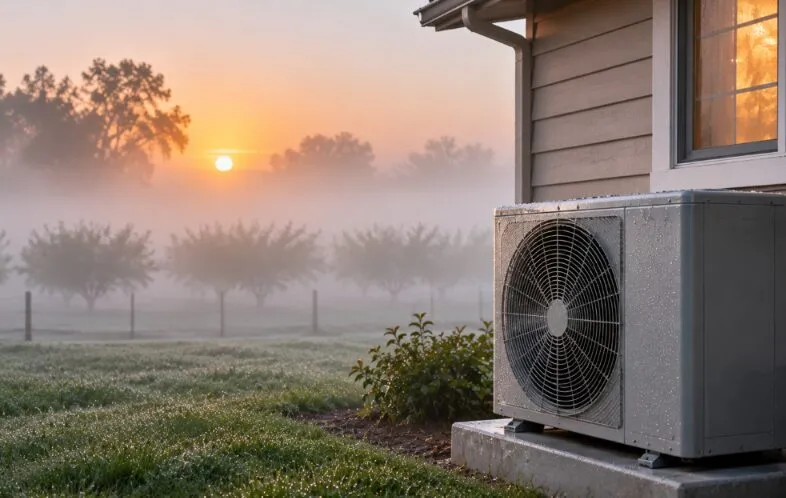
Tule fog is a thick ground fog that forms in the Central Valley on calm winter nights, often after rain. The season runs from about November through March. Cold air settles on the Valley floor under a layer of warmer air and stays trapped there.
Some years it barely shows up. Other years it stays for weeks. In December 2025, a National Weather Service meteorologist told KVPR it was the longest stretch of tule fog since the 1970s.
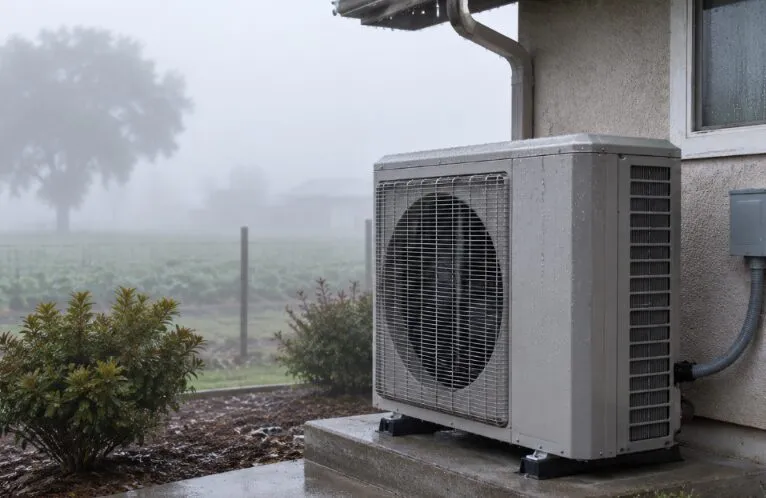
For a heat pump, fog means hours of air in the 30s and low 40s with humidity near 100%. That is harder on the outdoor unit than a clear, dry night a few degrees colder. Many Modesto homeowners are surprised by it in their first winter.
Why Does Fog Frost the Coil?
A heat pump warms your home by pulling heat out of the outdoor air. To do that, the outdoor coil has to run colder than the air passing over it. On a 38-degree foggy morning, the coil can easily drop below freezing.
When wet air hits a coil below 32 degrees, the water freezes onto the fins as frost. Dry air leaves little behind, but fog keeps feeding the coil water. Frost builds faster and blocks the airflow the coil needs.
As frost thickens, heating output drops and the unit runs longer to keep up. Then the control board starts a defrost cycle to melt the coil clear. In fog season that can happen many times a day, and each cycle pauses heating for several minutes.
Five Stages of a Defrost Cycle
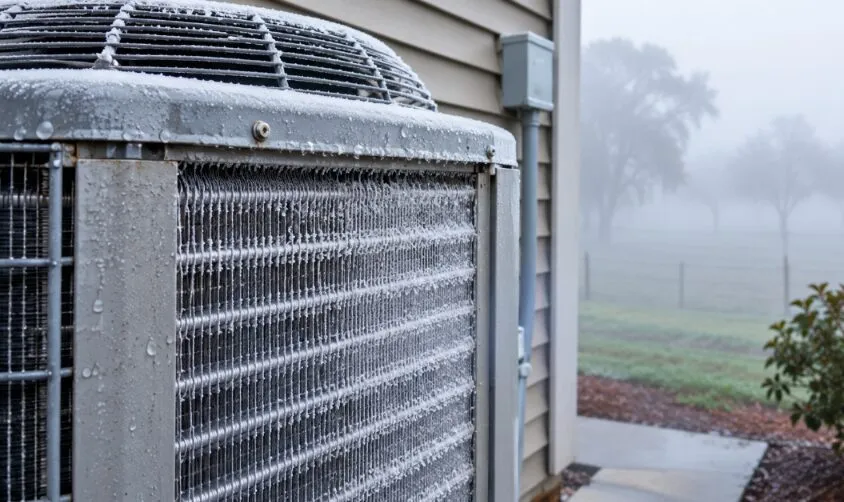
Defrost is normal and built in, but it can look and sound alarming the first time. Most heat pumps go through these five stages each time they clear frost from the outdoor coil.
System Reverses Direction
The heat pump briefly switches into cooling mode. Hot refrigerant flows to the outdoor coil instead of the indoor one, which melts the frost from inside. You may hear a whoosh or a thump when the valve that switches modes moves, at the start and at the end.
Outdoor Fan Stops
Most units shut off the outdoor fan during defrost, so the heat stays on the coil. A unit that seems stopped while the compressor still hums is usually in defrost, not broken. It should start up again on its own within minutes.
Steam Rises From the Unit
Melting frost on a warm coil makes a cloud of steam, especially in cold, still fog. From a distance it can look like smoke. Steam with no burning smell is a normal part of defrost, and it fades once the coil is clear.
Backup Heat Turns On
Because the system is briefly cooling, many heat pumps turn on electric backup heat so the house does not get a blast of cold air. That backup heat costs far more to run than the heat pump. So frequent defrosting raises winter bills.
Heating Resumes
Once the coil is clear, or a timer runs out, the system goes back to heating and the fan restarts. A healthy heat pump spends only minutes in defrost. In heavy fog, the next cycle may start after 30 to 90 minutes of run time.
Keep the Thermostat Steady in Fog
On a foggy morning, it is tempting to turn the thermostat up a few degrees when the vents blow cool. The house feels chilly and the unit is working hard, so a higher setting seems like a way to help.
It usually backfires. A big jump in the setting tells most heat pump thermostats to call for backup heat, not just the heat pump. Electric strip heat runs at full power until the house catches up, and that shows up on your Modesto Irrigation District bill.
Pick a comfortable setting and leave it, and avoid deep overnight setbacks that force a big morning recovery. A Wi-Fi thermostat built for heat pumps can warm the house slowly without leaning on backup heat. We include one free, up to a $200 value, with any new system.
What Is Normal in Fog Season?
Most fog-season behavior is normal, but a few signs point to trouble. This table sorts the common ones. If you see anything marked no, switch to emergency heat if you have it, and call for service.
| What you notice | Normal? | What it usually means |
|---|---|---|
| Steam from the outdoor unit | Yes | Defrost is melting frost from the coil |
| Whoosh at the start and end of defrost | Yes | The reversing valve is switching modes |
| Light frost that clears every hour or so | Yes | Defrost is working as designed |
| Thick ice that never clears | No | Failed defrost board, sensor or low refrigerant |
| Ice on top of the unit or around the fan | No | Blocked drainage or a defrost failure |
| Backup heat running for hours | No | The heat pump is not keeping up |
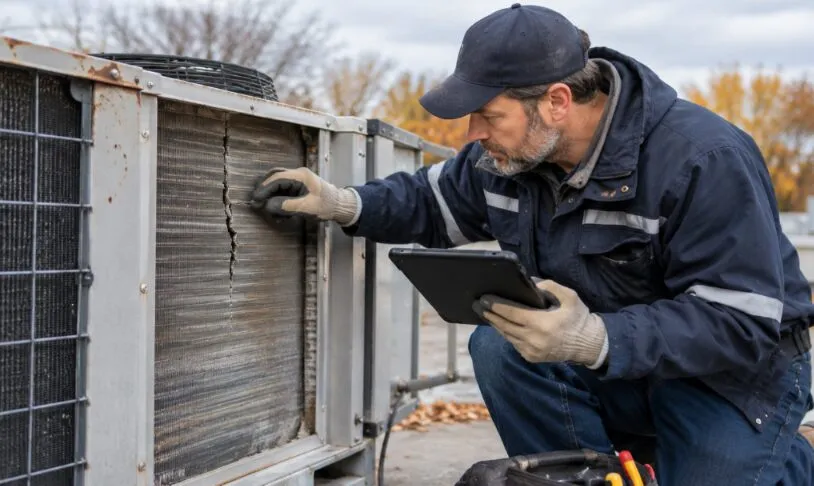
Ice that builds into a solid block means the defrost system is not doing its job. Do not chip at it or pour hot water on it, which can bend fins and damage tubing. Switch to emergency heat and book heat pump repair.
Simple Steps for Fog Season
You cannot stop the fog, but you can help the heat pump handle it. These steps take minutes and cost nothing. Together they cut wasted defrost cycles and backup heat through the coldest weeks.
- Keep leaves, plants and stored items away from the outdoor unit.
- Make sure meltwater drains away instead of refreezing under the unit.
- Change the filter, because a dirty one makes the indoor side work harder.
The best step comes before fog season. Our Energy Savings Agreement covers a spring and a fall visit for $189 for the first system. The fall visit is when to check the defrost board, coil sensor and refrigerant level. Members also get 15% off repairs and no overtime rate.
Signs Your Heat Pump Needs Service
A heat pump that defrosts often in fog is doing its job. One that cannot keep the house warm, ices over or runs backup heat for hours is not. Those are signs of a failing part, or a system that is undersized or worn out.
Watch for these signs through the season. If several show up together on an older unit, compare repair with replacement.
- Electric bills that climb far faster than the weather explains.
- Auxiliary heat showing on the thermostat for long stretches.
- A coil that ices over again soon after a repair.
- A heat pump that is many years old and needs repairs often.
If replacement makes sense, a new heat pump installation sized for your home handles damp cold with less backup heat. The federal heat pump tax credit ended on December 31, 2025. Local utility rebates change often, so check which ones cover the size you are weighing before you buy.
Heat Pump Repair and Maintenance in Modesto
Steam, a whoosh and short pauses in heat are normal in fog season. Ice that never clears and backup heat that runs for hours are not. When you see those, we repair, maintain and replace heat pumps, with a flat-rate price before any work starts.
Our family has run Dycus Heating and Air Conditioning in Modesto since 2001. The owner wrote the HVAC curriculum our NATE-certified technicians trained on. Weekday calls get same-day service, and a technician stays on call until 9 PM on weekends, for homes across Modesto, Manteca, Ceres and Riverbank.
Call us to book a heat pump check before the next stretch of fog. Reach us on weekdays from 7:00 AM to 5:30 PM.
Frequently Asked Questions
Is frost on my heat pump’s outdoor unit normal in Modesto?
A light, even layer of frost that clears every hour or so is normal in fog. Frost on only part of the coil is different. Frost on just the lower rows, or on one side, can point to low refrigerant or a weak fan. That is worth a service call.
Is it safe to run a heat pump when steam comes from the outdoor unit?
Yes. Steam during defrost is safe, so leave it running. Do not cover the unit with a tarp or box, since it needs open air on all sides to work. If you see smoke with a burning smell instead, turn the system off at the thermostat and call for service.
How much does heat pump repair cost in Modesto?
A heat pump diagnostic is $99 on weekdays and $150 on weekends and after hours. Homes more than 20 miles from our shop pay $129 on weekdays. That fee is separate from the repair cost. Every repair comes from our flat-rate book, so you see the price first.
How can I tell if my heat pump is stuck in defrost?
Watch the outdoor unit. If the fan stays off and steam keeps rising for much longer than usual, while the vents blow cool air, the system may be stuck. A bad defrost board or coil sensor is usually behind it. Turn on emergency heat and call us for a repair.
Does a newer heat pump handle fog better?
Generally, yes. Many newer heat pumps use demand defrost, which starts a cycle only when frost actually builds instead of on a fixed timer. Variable-speed models also adjust their output to the weather. That means fewer wasted cycles and less backup heat during long stretches of damp Central Valley fog.