Skip to content

Replacing several commercial rooftop HVAC units at once can reduce repeated installation expenses, but it does not always produce the lowest overall cost. For Modesto property owners managing multiple rooftop units, the decision depends on equipment age, repair history, crane access, and how much useful life remains in each system.
Replacing units together can consolidate crane rental, contractor mobilization, and site preparation. Replacing them individually spreads the expense across multiple budgets but may involve repeated installation costs and unexpected repair bills. Comparing these factors helps you choose a replacement schedule that protects your budget without retiring reliable equipment too early.
How Do the Costs Compare for Replacing Five Rooftop Units?
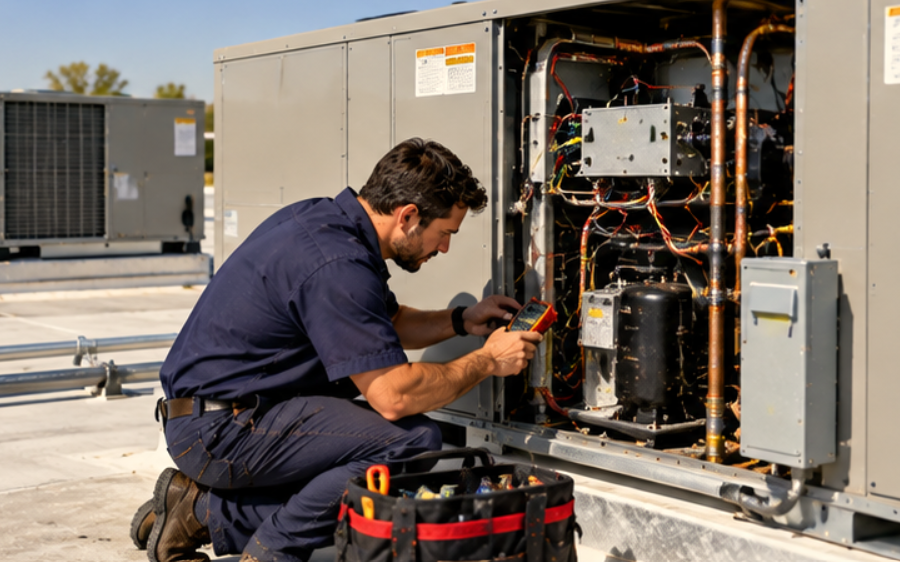
Consider a Modesto retail building with five 7.5-ton packaged rooftop units. The owner can replace all five in one coordinated project or replace each unit separately as it fails over six years. The following example illustrates how shared installation expenses and interim repairs can affect the total budget.
| Cost category | Replace all five | Replace individually |
|---|---|---|
| Equipment, curbs, disposal, and setting labor | $70,000 | $70,000 |
| Crane and rigging | Shared visits | Five separate trips |
| Permits and inspections | Coordinated where permitted | Repeated as required |
| Contractor mobilization | Shared project setup | Repeated setup |
| Assumed interim repairs and emergency costs | $0 | $13,000 |
| Illustrative total | $76,700 | $99,000 |
| Average per unit | $15,340 | $19,800 |
In this illustrative scenario, replacing all five units together costs about $22,300 less. These figures are planning assumptions, not verified current Modesto market prices or a contractor quote. Actual savings depend on equipment pricing, crane requirements, permit fees, installation scope, and whether the existing units genuinely require repairs while awaiting replacement.
Which Costs Drop When You Replace Rooftop Units Together?
The main savings come from expenses that can be shared across multiple replacements. Equipment, curb adapters, and unit-specific installation work still cost money for every rooftop system, but a coordinated project may reduce repeated site preparation, crane mobilization, and contractor setup.
- Crane mobilization: Multiple lifts may be coordinated during one scheduled visit.
- Site preparation: Roof access, safety arrangements, and tenant notifications can be organized together.
- Contractor setup: One project may reduce repeated travel and setup time.
- Permit coordination: Related work may be coordinated where the building department allows it.
- Project documentation: Equipment records and commissioning reports can be organized together.
For example, if a crane contractor charges a $1,800 mobilization fee for a visit, sharing that expense across five units would equal $360 per unit before additional lifting charges. Confirm whether the quote includes setup, lifting time, and rigging, because crane costs do not necessarily remain the same when several units are involved.
When Does Replacing Every Rooftop Unit at Once Cost More?
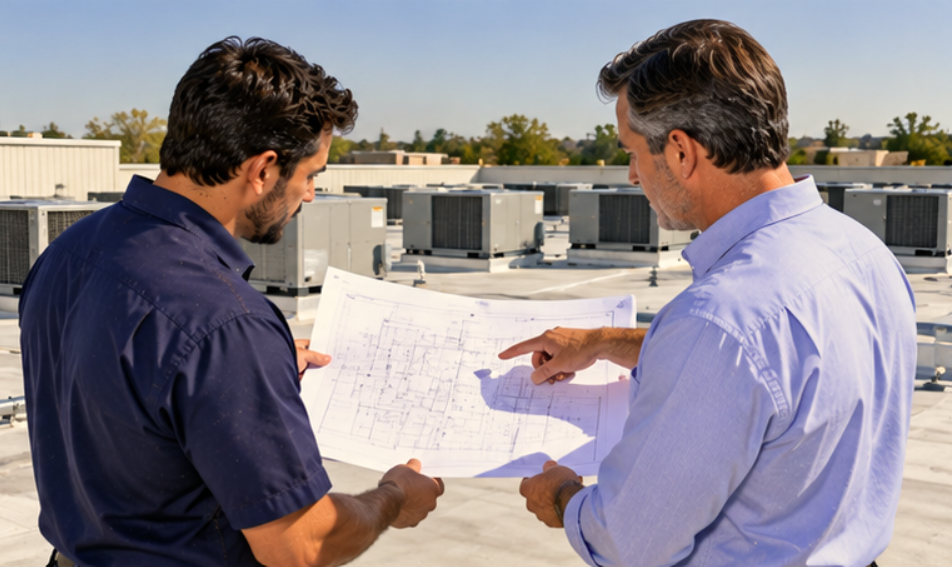
Replacing all rooftop units together can waste money when some systems still have substantial useful life remaining. Instead of using age alone, compare each unit’s repair history, operating performance, condition, and expected replacement needs. A coordinated project makes the most sense when the installation savings justify replacing the equipment earlier.
Review these four factors before committing to a full replacement.
- Age and condition: A 10-year-old unit operating reliably may not need replacement alongside an 18-year-old system with recurring failures.
- Repair frequency: If a unit needs several major repairs within 12 months, compare those costs with a replacement estimate before approving more work.
- Energy performance: Compare actual electricity use and suitable efficiency ratings. Even a 10% reduction in HVAC electricity use can matter when the equipment operates for long hours.
- Remaining service life: Ask a qualified HVAC contractor to assess component condition and likely repair needs rather than assuming every unit will last the same number of years.
For example, if two units require frequent repairs while three newer units operate reliably, replacing the older pair together may be more practical than replacing all five. A five-year age difference can help organize the assessment, but it is not a universal cutoff. Compare the cost of shared installation work against the value of keeping reliable equipment in service.
What Does Waiting for Rooftop Units to Fail Cost?
Replacing units individually can spread capital expenses over several years, but it may also expose the building to additional repairs, unexpected failures, and continued electricity costs. These expenses vary by property and equipment condition, so estimate them from service records and utility bills instead of assuming that every aging unit will fail.
Emergency Service During Hot Weather
Modesto’s hot summers can place heavy cooling demands on commercial rooftop equipment. If a unit fails during peak cooling season, the owner may need to arrange urgent diagnostics, parts, repairs, or replacement. Reviewing equipment condition before summer provides more time to compare estimates and schedule work around business operations.
Tenant Disruption and Business Operations
A planned replacement allows property managers to coordinate access and notify tenants about temporary cooling interruptions. An unexpected failure can disrupt offices, retail stores, and restaurants while the equipment is diagnosed or repaired. The financial impact depends on building use, lease terms, indoor conditions, and how quickly service can be restored.
Repairs on Aging Equipment
Before approving an expensive repair, compare its cost with the unit’s overall condition and expected remaining service life. A repair may be worthwhile if it restores dependable operation, but repeated component failures can change the calculation. Our post on commercial maintenance after summer covers checks that help owners evaluate equipment condition and plan ahead.
Electricity Use and Equipment Efficiency
Older rooftop units may use more electricity than suitable replacement models, but actual savings depend on equipment efficiency, cooling demand, operating hours, and utility rates. Review utility bills and available equipment data before estimating the financial benefit. A contractor can compare replacement options and calculate potential operating-cost differences using your building’s conditions.
Do Refrigerant Rules Force You to Replace Working Units?
Refrigerant regulations may influence equipment selection, but they do not automatically require property owners to replace functioning rooftop units. Requirements and available refrigerant options depend on the equipment category, model, and applicable regulations. Have your contractor identify each existing unit’s refrigerant and explain the options available for its replacement.
If the building has several units using different refrigerants, document them as part of the replacement assessment. Replacing equipment together may simplify future planning, but refrigerant standardization alone is not a sufficient reason to retire reliable systems early. Compare service needs, equipment availability, installation costs, and expected remaining life before making a decision.
What Rooftop Unit Information Do You Need Before Deciding?
A rooftop equipment inventory helps you compare replacement options using actual building conditions rather than assumptions. Ask your HVAC contractor to document the following information for every unit before preparing a multi-unit replacement estimate.
- Manufacture date: Record the date from each equipment data plate.
- Capacity and configuration: Identify tonnage, heating type, and model specifications.
- Refrigerant type: Document the refrigerant currently used by each system.
- Curb and roof condition: Check dimensions, compatibility, and visible deterioration.
- Service history: Review recurring repairs, maintenance records, and component failures.
- Operating performance: Assess cooling delivery, controls, and relevant system measurements.
- Installation requirements: Identify crane access, electrical work, and scheduling constraints.
A commercial HVAC assessment can organize these findings into a unit-by-unit replacement plan. Request a written comparison of replacing all units, replacing the oldest group, and phasing replacements over time. Each estimate should separate equipment, crane and rigging, permits, electrical work, curb modifications, disposal, and commissioning.
Can You Phase Rooftop Unit Replacement Over Time?
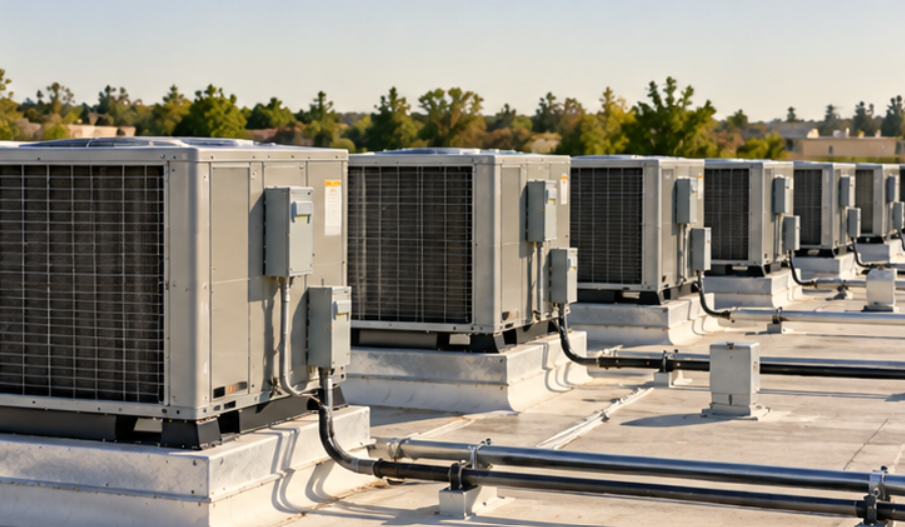
A phased replacement plan can work well when rooftop units have different ages and conditions. Instead of replacing every system or waiting for each one to fail, group units according to repair history, operating performance, installation requirements, and expected remaining service life.
For example, a property owner could replace three unreliable units during one coordinated project while retaining two newer systems that operate properly. This approach may capture some shared installation savings without spending money to retire equipment that remains useful. If a heat pump installation is being considered, evaluate its suitability for the building’s heating and cooling requirements before selecting the replacement equipment.
Before finalizing the budget, check current commercial incentive programs with the Modesto Irrigation District. Eligibility and funding can change, so verify the requirements directly rather than relying on older rebate estimates. Include any confirmed incentive in your financial comparison, but do not assume funding will be available until eligibility is established.
Frequently Asked Questions About Replacing Multiple Rooftop Units
How long does it take to replace five commercial rooftop units?
The schedule depends on crane access, equipment compatibility, electrical work, and roof conditions. A coordinated project may take several working days or longer. Ask your contractor for a written timeline covering removal, installation, commissioning, inspections, and expected cooling interruptions.
Can I finance a multi-unit rooftop replacement?
Financing may help spread the upfront expense, depending on eligibility and available terms. Compare the total financing cost with the projected expenses of phased replacement, including likely repairs and operating costs. Dycus Heating and Air Conditioning offers 0% APR financing for qualified customers, so confirm the applicable terms before budgeting.
Does it matter if the replacement units are different brands?
Different brands can have different controls, parts, service requirements, and warranty terms. However, using one brand is not automatically less expensive or more reliable. Compare equipment compatibility, service availability, performance, and total installed cost before deciding whether standardizing your rooftop units makes sense.
Should I wait for an energy rebate before replacing my units?
Check current Modesto Irrigation District programs and confirm eligibility, funding, deadlines, and equipment requirements. A confirmed incentive may improve the financial case for replacement, but delaying work on an unreliable unit can create additional repair costs or business disruption. Compare both possibilities before deciding.
What if one rooftop unit fails while I am planning the project?
Arrange a diagnostic visit to determine whether a repair can keep the unit operating reliably until the planned replacement. A targeted commercial HVAC repair may be reasonable if the cost is justified and replacement is approaching. Request written findings and an estimate before approving major work.
Why Choose Dycus Heating and Air Conditioning for Rooftop Unit Replacement in Modesto, CA?
Dycus Heating and Air Conditioning has served Modesto and Stanislaus County since 2001, providing commercial and light commercial HVAC services that include rooftop units, chillers, cooling towers, and ventilation. For multi-unit replacement projects, documenting equipment condition and installation requirements helps property owners compare options before committing to a major capital expense.
Our NATE-certified technicians can assess existing equipment and identify factors that may affect the replacement schedule. A useful assessment should record each unit’s specifications, condition, service history, and installation requirements. This gives property owners a clearer basis for comparing recommendations rather than relying on a single total for the entire roof.
For commercial HVAC installation and replacement, request an itemized estimate that separates equipment costs from crane and rigging, curb work, permits, electrical requirements, and other installation expenses. Dycus Heating and Air Conditioning offers free estimates, and 0% APR financing is available for qualified customers. Call (209) 544-8072 to discuss your building’s rooftop equipment and replacement options.