Skip to content

style> table { width: 100%; border-collapse: collapse; margin: 1.5em 0; } table th, table td { border: 1px solid #ddd; padding: 12px; text-align: left; } table th { background-color: #f5f5f5; font-weight: bold; } table tbody tr:nth-child(even) { background-color: #fafafa; } </style
A summer of uneven cooling does not always end with a broken commercial HVAC unit. One side of the building may stay warmer than the rest, employees may keep adjusting thermostats, or certain rooms may become uncomfortable during the hottest afternoons while the system continues running. Because the building is still technically cooling, it is easy to put the problem off until next summer.
For Modesto businesses, that uneven performance is worth investigating before assuming you need new equipment. Commercial properties often have multiple rooftop units, zones, thermostats, and controls, so a comfort problem in one area does not necessarily mean the entire HVAC system is failing. The key is determining whether the problem comes from airflow, coils, controls, economizers, electrical components, refrigerant, or equipment that is genuinely reaching the end of its service life.
What Does Uneven Cooling Tell You About a Commercial HVAC System?

Uneven temperatures across a commercial building can provide useful clues about what is happening with the HVAC system. A property with multiple rooftop units can continue operating even when one unit has gradually lost capacity. Instead of the entire building becoming uncomfortable, only certain areas may begin to struggle.
That makes commercial HVAC problems different from what many homeowners experience. A commercial property can have several units operating independently, and one can underperform for weeks before the issue becomes serious enough to disrupt operations.
Look at the Pattern, Not Just the Temperature
| What Employees Notice | What It May Point Toward |
|---|---|
| One area stays consistently warmer | An underperforming unit, airflow issue, or zone damper problem |
| Cooling became worse gradually | Dirty coils, restricted airflow, or developing mechanical wear |
| Some areas are cold while others stay warm | Zone controls, scheduling, or airflow imbalance |
| Warm air appears during hot afternoons | Economizer or outdoor-air control problems |
| Comfort is acceptable but energy use increased | Longer equipment runtime or declining performance |
These symptoms help determine where testing should begin, but they do not replace an on-site diagnosis. If measurements identify a mechanical or controls problem, professional commercial HVAC repair in Modesto can address the affected equipment without assuming every unit on the property needs replacement.
What Can Make a Commercial HVAC System Drift Out of Balance?
Commercial HVAC equipment operates under demanding conditions, particularly when rooftop units are exposed to Modesto’s summer heat, dust, and seasonal air-quality challenges. A system can gradually lose performance without producing an obvious breakdown.
Rooftop Equipment Takes a Beating
Rooftop units spend the summer exposed to direct sunlight and high outdoor temperatures. As conditions become more demanding, equipment may run longer to maintain indoor temperatures. Outdoor coils can also accumulate dirt and debris, making it harder for the system to transfer heat effectively.
Economizers Can Create Cooling Problems
Economizers use favorable outdoor conditions to reduce mechanical cooling demand. If an actuator, sensor, damper, or control develops a problem, the unit may bring in too much outside air at the wrong time. On a hot afternoon, that can create a comfort problem that feels like lost cooling capacity.
Filters and Belts Affect Airflow
Commercial filters need consistent attention, while belts need to remain properly tensioned and in good condition. Restricted airflow can leave certain areas warmer and force equipment to operate longer.
Zone Controls Can Work Against Each Other
Commercial buildings may have multiple thermostats, dampers, sensors, and schedules controlling different areas. A failed sensor, overridden schedule, or damper problem can cause zones to behave differently even when the primary HVAC equipment is still operational.
Local conditions matter as well. Modesto’s dust and seasonal smoke can increase the amount of debris reaching filters and outdoor equipment. Maintenance frequency should therefore reflect the building, equipment, operating hours, and actual site conditions rather than relying on a one-size-fits-all schedule.
What Should Be Measured Before You Approve Commercial HVAC Replacement?
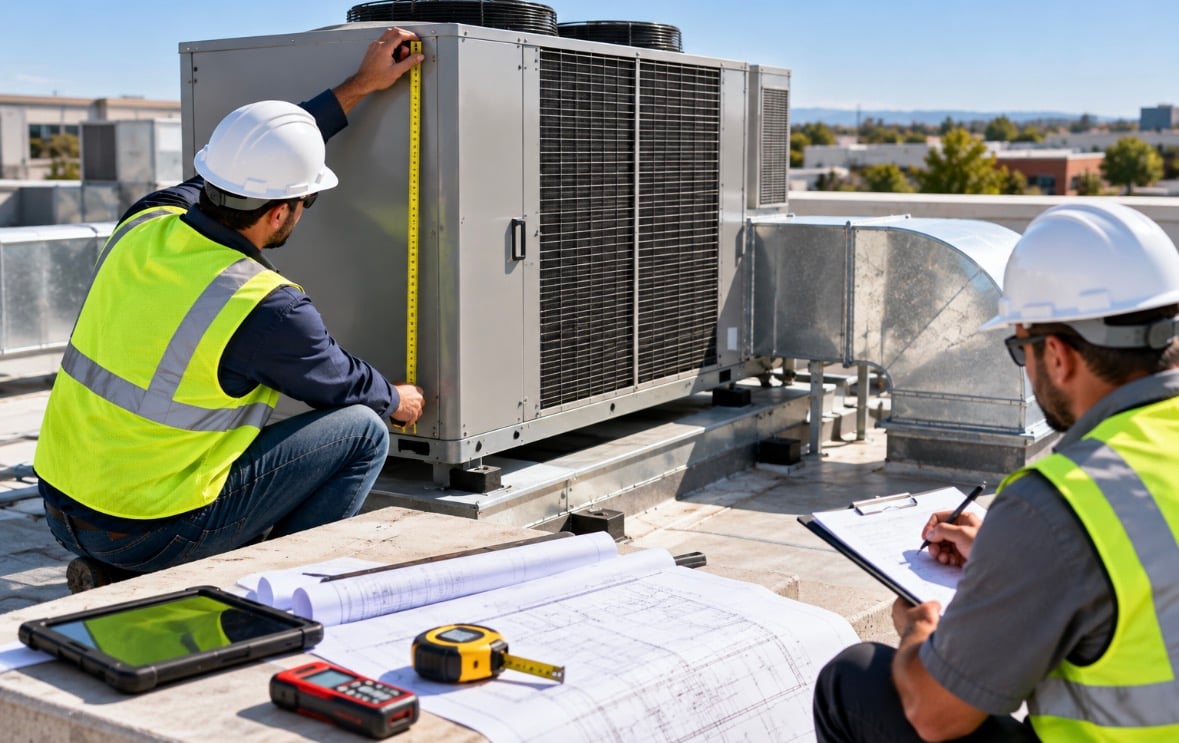
Uneven cooling does not automatically mean the equipment needs to be replaced. Before approving a major equipment project, it is reasonable to ask what measurements support the recommendation.
A commercial HVAC assessment should determine whether individual units are actually losing capacity or whether airflow, controls, refrigerant, or another serviceable component is preventing them from performing properly.
Measurements That Help Separate Repair From Replacement
- Supply-air temperature: Shows how individual units are performing under current conditions.
- Airflow: Helps separate equipment problems from restrictions or distribution issues.
- Electrical readings: Can reveal motors or components operating outside expected conditions.
- Refrigerant condition: Helps identify whether charge-related issues are affecting performance.
- Economizer operation: Confirms whether dampers and controls respond when conditions change.
- Control response: Shows whether thermostats, sensors, and zones are operating as intended.
These readings turn a general comfort complaint into information about specific equipment. A property with six rooftop units may have one unit that needs repair, another that requires closer monitoring, and four that remain in acceptable operating condition.
When testing shows that an older unit is no longer a practical repair candidate, the next step should still be based on the building’s actual load and operating needs. Proper commercial HVAC installation and replacement in Modesto should include evaluating the facility and correctly sizing the new equipment rather than automatically matching the old unit.
What Happens During a Commercial HVAC Maintenance Visit?
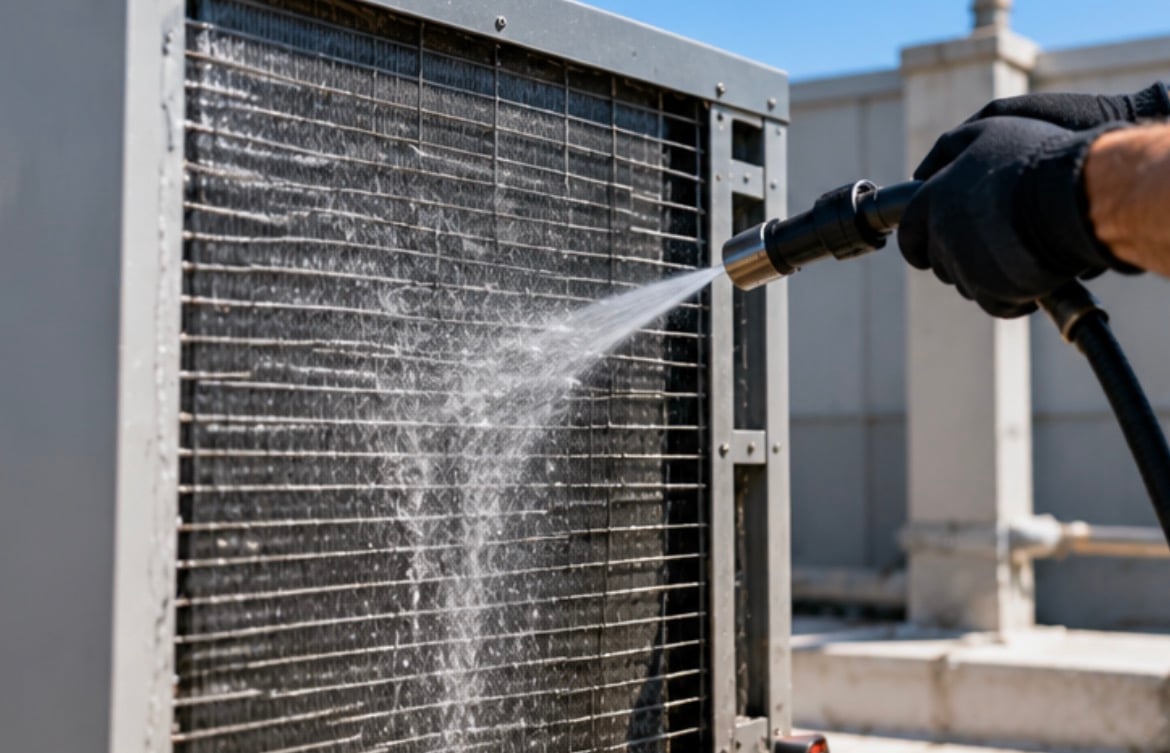
A commercial maintenance visit should leave you with a clearer picture of each unit’s condition, not just a checklist marked complete. On a Modesto property with several rooftop units, technicians need to work through the equipment individually because one unit may have a coil or airflow problem while another is operating normally. That unit-by-unit approach makes the findings useful for both immediate repairs and future budgeting.
Inspecting the Rooftop Unit
The technician checks the condition of components that directly affect cooling performance, including filters, coils, belts, electrical connections, and other accessible operating components. Outdoor coils deserve particular attention after a Modesto summer because accumulated dust and debris can restrict heat transfer and contribute to longer runtimes.
Checking Airflow and Temperature
A unit can turn on and still fail to deliver the cooling the building needs. Measuring supply-air temperature and checking airflow helps determine whether the equipment is actually performing as expected or simply running longer to compensate for reduced capacity.
Testing Economizers and Controls
Economizers, dampers, sensors, and zone controls need to respond correctly as conditions change. A stuck damper or faulty control can create a warm zone even when the rooftop unit itself is capable of producing adequate cooling, making functional testing an important part of the visit.
Recording What Each Unit Is Doing
The useful part of maintenance is not only what gets cleaned or adjusted that day. Recording operating conditions and findings for individual units creates a baseline for the next visit. If one unit begins showing a gradual decline while the others remain stable, that change becomes much easier to identify before it develops into a disruptive failure.
Is Scheduled Commercial HVAC Maintenance Worth It in Modesto?
For a business owner, the value of scheduled maintenance is not simply having a technician visit the roof on a particular date. It is about catching changes in equipment performance before they become a failed unit during business hours. A commercial HVAC problem can quickly affect employees, customers, inventory, production areas, or tenant comfort depending on the property.
Modesto’s long cooling season also means commercial equipment can accumulate substantial operating hours before temperatures finally drop. Local conditions can add to that workload, particularly for rooftop equipment exposed to dust, outdoor debris, and seasonal smoke.
A consistent maintenance program can help identify issues such as:
- Restricted airflow: Dirty filters or developing mechanical problems can reduce the amount of conditioned air reaching occupied areas.
- Dirty outdoor coils: Accumulated debris can make it harder for rooftop equipment to release heat efficiently.
- Worn belts and components: Gradual wear can affect equipment performance before a complete failure occurs.
- Control problems: Faulty sensors, dampers, or thermostats can create comfort issues that appear to be equipment failures.
- Declining performance: Changes in operating measurements can reveal a unit that is beginning to struggle before employees notice a major difference.
The goal is not to repair or replace components simply because they are old. It is to understand the condition of each unit and address problems based on what the equipment is actually showing. For a Modesto business with multiple rooftop units, that information can make it easier to plan repairs, prioritize future replacements, and avoid unnecessary emergency service.
FAQs
Does uneven cooling mean my commercial HVAC units need replacement?
Not necessarily. Uneven temperatures can result from airflow restrictions, dirty coils, economizer problems, zone controls, or individual equipment issues. Testing each affected unit is more useful than assuming the entire system needs replacement.
How often should commercial HVAC equipment be maintained?
The right schedule depends on equipment type, operating hours, occupancy, manufacturer requirements, and site conditions. Commercial properties with heavily used rooftop equipment may require more frequent attention than smaller or lightly used facilities.
What is an economizer, and why does it matter?
An economizer uses outdoor air for cooling when conditions are suitable. Problems with its sensor, actuator, controls, or dampers can allow unwanted outdoor air into the building and affect comfort and HVAC performance.
Should I replace an older rooftop unit if it is still cooling?
Age should be considered alongside operating performance, repair history, efficiency, component condition, and the unit’s ability to meet the building’s load. An older unit that is still performing reliably presents a different decision from one requiring repeated repairs.
Can different commercial HVAC systems be maintained on the same property?
Yes. Commercial properties can contain rooftop units, chillers, VRF or VRV systems, and other equipment, particularly when a facility has expanded or been renovated over time. The maintenance program should account for the specific equipment installed.
Why Choose Dycus Heating and Air Conditioning for Commercial HVAC in Modesto?
A commercial property with several rooftop units and uneven cooling needs a diagnosis before it needs an equipment quote. At Dycus Heating and Air Conditioning, we evaluate individual equipment and operating conditions so we can determine whether the right next step is maintenance, a targeted repair, or replacement.
We have been serving Modesto since 2001, and our NATE-certified technicians work with commercial equipment ranging from rooftop units to more complex commercial HVAC systems. Whether your building needs commercial HVAC repair, ongoing commercial HVAC maintenance, or a planned commercial HVAC replacement, the recommendation should start with what the equipment is actually doing.
If your building struggled with hot and cold spots this summer, do not wait for one of those zones to turn into a complete system failure. Call (209) 544-8072 to schedule an assessment and get a clearer picture of which equipment needs attention now and what can continue operating reliably.