Skip to content

Installing a 10-ton rooftop HVAC unit on a commercial building in Modesto, CA, involves more than the cost of the equipment. The total price can include crane rental, curb adapters, electrical connections, permits, removal of the old unit, and startup testing. Roof access and the condition of the existing installation can also affect the final cost.
A straightforward replacement may require less work than a project involving electrical upgrades, curb modifications, or roof repairs. This guide breaks down the major expenses involved in installing a 10-ton rooftop unit, explains why crane and permit costs vary, and shows you what to check in a contractor’s estimate before approving the project.
How Is the Installed Price of a 10-Ton Rooftop Unit Broken Down?
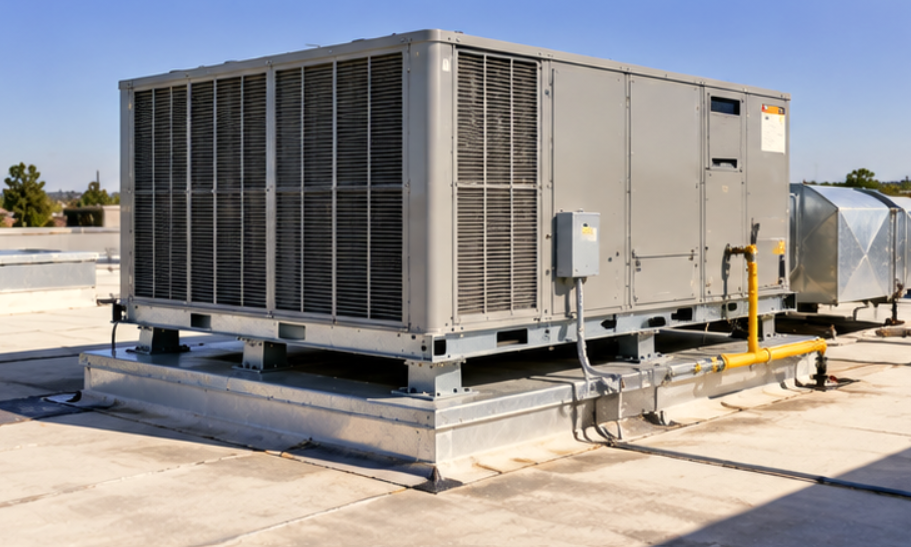
Installing a 10-ton packaged rooftop unit on a commercial building in Modesto involves several costs beyond the equipment itself. The estimates below break down typical budget categories, including crane rental, curb modifications, electrical work, permits, and removal of the old unit. Use these figures as a starting point when comparing contractor bids, since your building’s roof access and existing infrastructure will affect the final price.
| Line item | General Modesto range |
|---|---|
| 10-ton packaged RTU, standard to high efficiency | $8,000–$20,000 |
| Crane lift and rigging | $2,700–$5,300 |
| Curb adapter, or a new curb where one will not fit | $500–$4,000 |
| Electrical: disconnect, whip, breaker | $600–$2,500 |
| Permit and inspection | $250–$800 |
| Removal, disposal, roof patching and startup | $1,400–$5,700 |
A straightforward swap onto a matching curb with adequate electrical lands near $14,000. A job needing a new curb, a service upgrade, difficult crane access and a premium unit reaches $38,000. Note that the equipment accounts for barely half of either figure, and for none of the gap between two bids on your roof.
What Adds to the Cost of Installing a Rooftop Unit?
The price of a 10-ton rooftop unit is only one part of the installation budget. The remaining costs depend on how much work is needed to remove the existing equipment, prepare the roof, connect the new system, and verify that it operates correctly. This is why two estimates for the same unit can differ even when both contractors quote comparable equipment.
When comparing bids in Modesto, check that each HVAC contractor has included the same work. A lower total may reflect a legitimate price difference, but it may also exclude items another contractor has already accounted for.
Crane and Rigging Costs
The contractor must account for the unit’s weight, lifting distance, roof access, and space available for crane setup. Difficult access or overhead obstructions can increase the cost.
Curb Adapters and Roof Repairs
If the replacement unit does not match the existing curb, an adapter or new curb may be necessary. Deteriorated flashing or roof damage can add further expenses.
Electrical Upgrades for the New Unit
The existing disconnect, wiring, breaker, and available electrical service must meet the new unit’s specifications. Any required upgrades should appear clearly in the estimate.
Removal, Disposal and Commissioning
The quote should identify the cost of removing and disposing of the old equipment, reconnecting the new unit, and checking its controls, airflow, safety devices, and operating performance.
What Happens During a Commercial Rooftop HVAC Replacement?
Replacing a 10-ton rooftop unit involves several coordinated steps, from preparing the site and removing the old equipment to installing the replacement and testing its operation. Crane time is only one part of the schedule. The condition of the existing roof curb, electrical connections, and ductwork can affect how smoothly the installation proceeds and whether additional work is needed.
Site Preparation and Safety Checks
Before the crane arrives, the installation team confirms access to the building and roof, identifies the lifting area, and coordinates any necessary parking or access restrictions. Technicians shut down and isolate the existing equipment’s electrical supply, following appropriate lockout procedures. Refrigerant must also be recovered using compliant equipment and procedures before the old unit is removed.
Removing the Existing Rooftop Unit
The crane lifts the old unit from its mounting curb and lowers it to a designated area for removal. Once the equipment is out of the way, the contractor can inspect the exposed curb, flashing, and surrounding roof surface for damage or deterioration. If repairs or a curb adapter are needed, this is the point when the installation scope and cost may change.
Positioning the Replacement Unit
If the existing curb is compatible with the new equipment, the replacement unit can be positioned on it according to the manufacturer’s installation requirements. If the dimensions differ, an appropriate adapter or replacement curb may be necessary. The crew then secures and seals the installation to help prevent water intrusion and ensure proper condensate drainage.
Reconnecting and Testing the System
After the unit is secured, technicians reconnect the ductwork, electrical connections, controls, and gas piping if the equipment uses gas heat. They then follow the manufacturer’s startup and commissioning procedures, checking items such as airflow, refrigerant charge where applicable, safety controls, and operating performance. Confirming that the system operates correctly is an essential part of the installation, not a step to skip to finish the job sooner.
Why Do Crane Costs for Rooftop Units Vary Between Buildings?
Crane rental costs depend on more than the weight of a 10-ton rooftop unit. The required lifting capacity, distance from the crane to the installation point, available setup space, and time needed on site all affect the price. A building with limited access or obstacles around the roof may require a different crane configuration than a site with a clear lifting area.
Before accepting a crane allowance in a contractor’s estimate, ask how the cost was calculated. The main factors include:
- Lifting distance: The distance from the crane’s setup location to the rooftop unit can affect the crane size and configuration required.
- Site access: Narrow streets, limited parking, and restricted setup areas may complicate crane positioning.
- Overhead obstructions: Power lines, nearby structures, and other obstacles can affect the lift plan and required equipment.
- Time on site: Delays caused by access problems, unexpected curb repairs, or installation complications may increase rental costs.
- Traffic and site coordination: Some locations may require additional arrangements to manage vehicle access or keep the lifting area clear.
For a commercial property in Modesto, the most useful estimate identifies crane and rigging costs separately rather than burying them in a single installation figure. Confirm whether the quoted amount includes setup, the planned lifting duration, and any additional charges if the work takes longer than expected.
What Permits Are Required for a Rooftop HVAC Replacement in Modesto?

Replacing a 10-ton commercial rooftop unit in Modesto may require mechanical, electrical, or other permits, depending on the scope of work and the existing building systems. Before approving a contractor’s estimate, confirm which permits apply and whether permit fees and inspection arrangements are included in the quoted installation price.
- Mechanical permit: May be required for replacing the rooftop HVAC unit and associated mechanical work.
- Electrical permit: May be required if the project involves new circuits, electrical service changes, or other regulated electrical work.
- Building or structural permit: May apply if the installation requires structural roof modifications or changes to the equipment support.
- Inspection: The applicable building department may require an inspection to verify that permitted work meets relevant requirements.
Permit requirements depend on the project scope and the authority responsible for the property. Confirm the applicable requirements with the City of Modesto or the relevant building department in Stanislaus County before work begins.
California’s Title 24 energy standards may also affect qualifying replacement projects, depending on the equipment and work involved. Ask the contractor to identify any applicable energy-code requirements and include associated work in the estimate. A clear breakdown of permits, fees, inspections, and code-related upgrades makes it easier to compare bids and avoid unexpected costs after the new unit is delivered.
Does Refrigerant Type Change What a 10-Ton Unit Costs?
Refrigerant type is worth checking when comparing commercial rooftop units, but it should not be treated as a separate installation charge without reviewing the proposed equipment. Refrigerant requirements vary by model and equipment category, so ask each contractor to identify the exact unit, its refrigerant, and its published specifications.
Also consider long-term serviceability, warranty coverage, and the availability of compatible parts and refrigerant. A different refrigerant does not automatically make one unit cost more or less over its service life. Compare equipment prices, efficiency ratings, warranty terms, and installation requirements together to understand what you are paying for.
What Should You Ask Before Approving a Rooftop Unit Bid?
Four questions separate a complete bid from a thin one, and all four can be answered in writing before anyone orders equipment. A contractor who will not break the job down this way is asking you to take a five-figure number on faith.
- Does the new unit’s footprint match the existing curb, and is an adapter included or excluded?
- Is the crane priced as its own line, with the machine size your site calls for?
- Who pulls the permit and schedules the inspection, and is the fee inside the quoted price?
- What electrical work is assumed, and was the existing disconnect and panel inspected?
Here is the position we take, even when it costs us the job: a bid sitting thousands below the others on the same roof is usually missing the curb adapter, the electrical or both. Ask the low bidder those four questions before you decide they are the bargain in your stack.
Should You Price a Heat Pump Rooftop Unit Too?
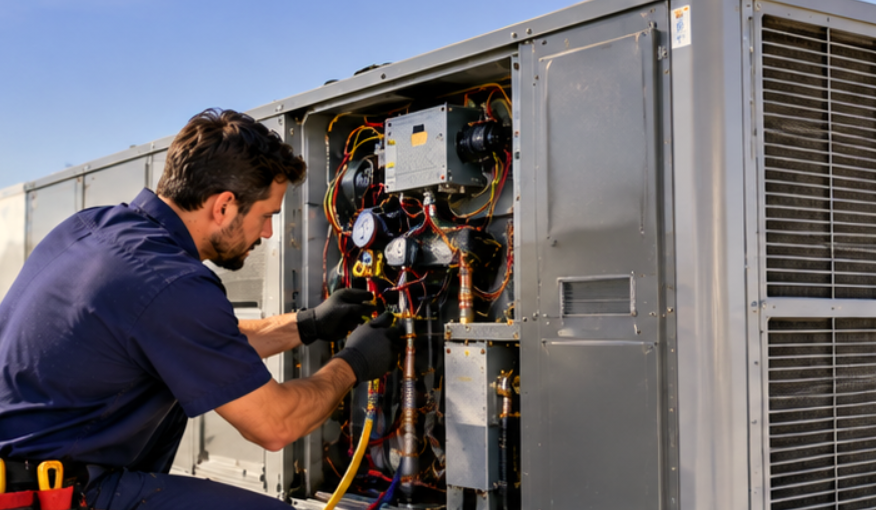
Yes, if the old unit is coming off anyway. The crane, curb, electrical and permit lines are nearly identical for a packaged heat pump and a straight changeout, so the decision in front of you is the equipment difference rather than the cost of the whole project.
A packaged heat pump heats and cools from one electric system, which suits a city where January afternoons average about 56 degrees. Price a heat pump installation on the same bid as the straight changeout so the two options sit side by side.
If you are not sure the old unit is finished, a commercial HVAC repair visit will tell you what failed and whether the unit still makes rated capacity. Our post on why commercial HVAC systems fail in hot weather covers the failure patterns that show up first here.
Frequently Asked Questions About 10-Ton Rooftop Unit Installation
Can I reuse the existing roof curb when installing a new 10-ton rooftop unit?
Yes, if the existing curb is compatible with the replacement unit’s dimensions and installation requirements. If the footprint differs, a curb adapter or new curb may be necessary. Ask your contractor to verify compatibility before finalizing the equipment order and installation price.
How long does a 10-ton rooftop unit replacement take?
A straightforward replacement may be completed in one day when the crane, equipment, and installation crew are coordinated in advance. Curb repairs, electrical upgrades, or unexpected roof damage can extend the schedule. Ask your contractor for a project timeline that accounts for these possibilities.
What electrical service does a 10-ton rooftop unit require?
Electrical requirements vary by model, including voltage, phase, and minimum circuit specifications. Before installation, a qualified contractor should compare the new unit’s nameplate requirements with your building’s existing electrical service. Any necessary wiring, breaker, or disconnect upgrades should be identified in the estimate.
Is a high-efficiency rooftop unit worth the additional cost in Modesto?
It can be, particularly for commercial buildings with long cooling schedules during Modesto’s hot summers. Compare the proposed units’ applicable efficiency ratings, purchase prices, and estimated electricity use. A contractor can help estimate potential operating savings based on your building’s usage and utility rates.
What maintenance helps a new rooftop unit last longer?
Follow the manufacturer’s maintenance schedule and arrange regular professional inspections based on operating conditions. Service may include filter changes, coil cleaning, electrical checks, condensate drainage inspections, and performance testing. Dycus Heating and Air Conditioning’s commercial HVAC maintenance can help keep the system operating reliably and identify developing problems early.
Why Choose Dycus Heating and Air Conditioning for Rooftop Unit Installation in Modesto, CA?
Our commercial HVAC crews have worked on Modesto and Stanislaus County buildings since 2001, from rooftop units to chillers, cooling towers and ventilation. On a rooftop replacement that history matters mostly for the curb, because we have opened enough of them in this building stock to price the surprises honestly.
Our technicians are NATE-certified, and we photograph each phase of a commercial installation from removal through final commissioning. You get the record of what the curb looked like when the old unit came off, which is the part of the job nobody can see from the ground once the new unit is sitting on it.
Every line on our commercial HVAC installation quote stands alone, from the crane and curb adapter to the electrical, permit and disposal, so you can set it beside any other bid and see exactly where the numbers differ. Estimates are free, and 0% APR financing is available for qualified customers.