Skip to content

style> table { width: 100%; border-collapse: collapse; margin: 1.5em 0; } table th, table td { border: 1px solid #ddd; padding: 12px; text-align: left; } table th { background-color: #f5f5f5; font-weight: bold; } table tbody tr:nth-child(even) { background-color: #fafafa; } </style
When Modesto temperatures drop and you switch your heat pump from cooling to heating, you expect warm air from the vents within minutes. Instead, you may notice cool airflow, longer run times, uneven temperatures, or a system that seems to work much harder than it did during summer. That can be confusing when the same heat pump kept your home comfortable through the Valley heat. Some heating behavior is completely normal, while other symptoms point to a problem with airflow, refrigerant, the outdoor unit, thermostat, or reversing components. Knowing the difference can help you avoid calling for a repair when the system is operating normally, while also helping you recognize when a heating issue should not be ignored.
What Actually Changes Inside a Heat Pump in Heating Mode?
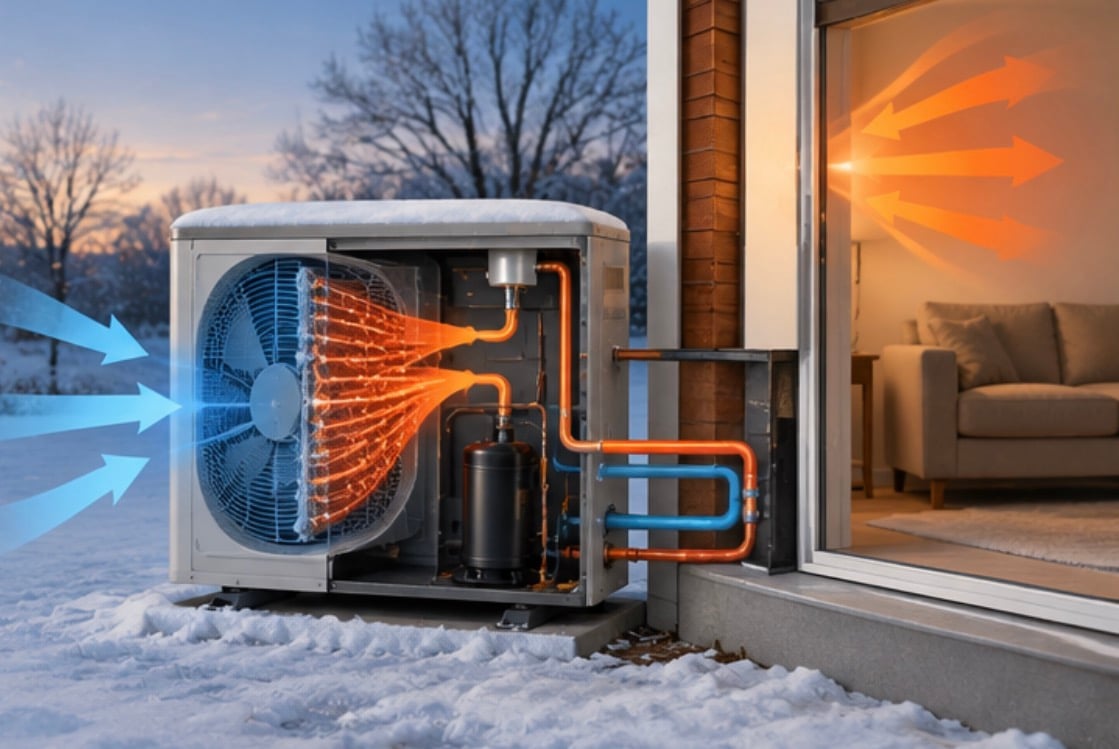
A heat pump is an air conditioner that can run in reverse. In cooling it removes heat from the house, and in heating it gathers heat from outdoor air and moves it indoors, using the same compressor and the same refrigerant circuit.
The component that makes the reversal possible is the reversing valve, and it sits unused from roughly April through October in this climate. Two other systems also stay dormant across the summer: the defrost controls, and the auxiliary heat circuit that supports the heat pump in colder weather.
That is why a system with a clean cooling record can still struggle in November. It has only proved that half of its hardware works, and the other half has been sitting still for six or seven months.
Which Heat Pump Symptoms Point to Which Cause?
Heat pump complaints sound similar on the phone but separate reasonably well once you look at the pattern behind them. How long the problem lasts, whether the outdoor unit is running, and what the thermostat display shows will usually narrow the field considerably before anyone arrives.
The symptoms below are the ones technicians encounter most often through the first weeks of heating season. Each points toward a likely source, though instrument readings are what confirm it.
| What You Notice | What It Usually Points To |
|---|---|
| Genuinely cold air on a call for heat | A reversing valve stuck in cooling, or a solenoid that is not energizing. |
| Steam from the outdoor unit and a few cool minutes indoors | A normal defrost cycle doing exactly what it should. |
| Defrost cycles repeating every few minutes | A failed defrost control or sensor, or a charge that has dropped. |
| The house stays comfortable but the bill climbs sharply | Auxiliary heat running at times when it should be locked out. |
| The house never quite reaches setpoint on cold mornings | Low charge, a lockout set wrongly, or aux heat failing to engage. |
| A breaker that trips only when heat is called | The auxiliary heat strip or the circuit feeding it. |
The distinction worth holding on to is between cool air and cold air. Supply air from a heat pump is warmer than the room but cooler than your hand, so it can feel wrong at the register while the system is working exactly as designed.
What Makes Heating Mode Harder on the Equipment Than Cooling?
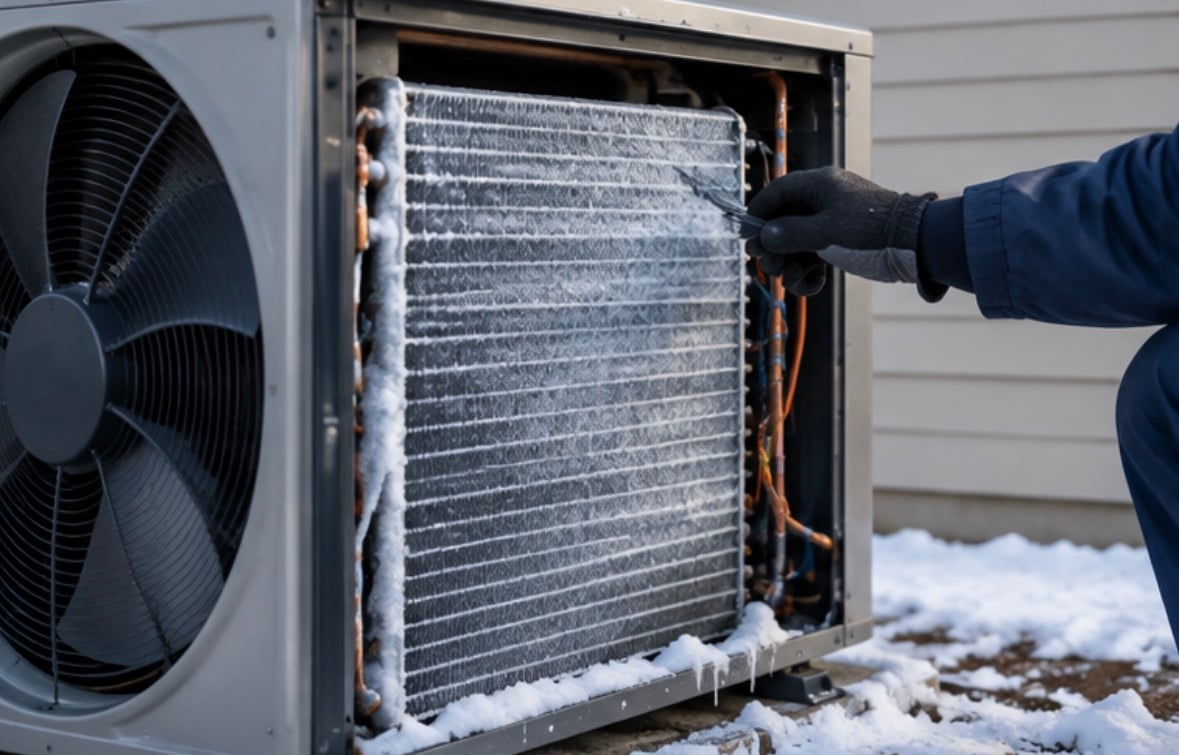
Heating asks a heat pump to do something less forgiving than cooling, and it does so using parts that have had no exercise for months. Four differences account for most of the faults that appear in the first cold week.
Engages a Valve That Has Been Idle Since Spring
The reversing valve is solenoid driven and can stick part way through its travel after a long dormant summer. A valve that does not complete its movement can leave the system running in cooling while the thermostat calls for heat.
Draws on Outdoor Air That Holds Less Available Heat
A heat pump gathers warmth from outside, so its capacity falls as conditions get colder. That is expected physics rather than a defect, but it means any existing weakness in the system shows up sooner in heating than it did in cooling.
Brings a Second Heating Circuit Into Operation
Auxiliary heat, whether electric strips or a gas furnace in a dual-fuel setup, has its own controls, breaker and failure modes. None of that hardware is tested at any point during cooling season.
Exposes a Refrigerant Charge That Summer Tolerated
A charge slightly below specification can still cool a house acceptably through summer. Heating mode is less tolerant, so the same system may fail visibly once the season turns.
Tule fog season is the local complication worth knowing about. Modesto winters are mild but damp, and damp air near freezing is precisely the condition that drives frequent defrost cycles, which homeowners often report as a fault.
What Should You Check Before Calling for Heat Pump Repair?
A handful of checks take only a few minutes and occasionally resolve the problem without a service call at all. More often they narrow the question usefully, which tends to make the eventual visit shorter, the diagnosis more direct, and the resulting quote easier to understand.
The items below are safe for a homeowner to look at. Anything involving refrigerant, the reversing valve or the electrical strips needs instruments and should be left alone.
| What to Check | Why It Matters |
|---|---|
| Thermostat mode and setpoint | A system left in cooling, or set below room temperature, will not call for heat. |
| Whether the display shows aux or emergency heat | Tells you the backup is carrying the load, which explains a sudden rise in cost. |
| The air filter | A restricted filter reduces airflow and can make a working system seem weak. |
| Whether the outdoor unit is running at all | A heat pump that is not running outdoors points somewhere quite different. |
| How long the cool air actually lasts | A few minutes suggests defrost. Continuous cold air does not. |
| The breaker serving the air handler | A tripped breaker can disable auxiliary heat while the heat pump still runs. |
If those checks come back clear, the remaining possibilities all need gauges. Pressures and temperatures either side of the reversing valve are what separate a stuck valve from a low charge, and the two carry very different costs. Heat pump repair in Modesto covers that diagnosis.
What Happens During a Heat Pump Heating Diagnostic?

A heating diagnostic works through the possibilities in order of likelihood and cost, rather than starting with the most expensive component in the system. That sequence matters a great deal here, because several quite different faults produce an identical complaint at the supply register.
Confirming the Thermostat Is Calling Correctly
Wiring faults and configuration errors imitate mechanical failure convincingly. Verifying that the thermostat is sending the right signal rules out a category of problem before any panel comes off.
Verifying the Reversing Valve Actually Reverses
The valve is checked electrically and by reading pressures and temperatures across it. A solenoid that is not energizing is a modest repair, while a valve that has failed internally is a significant one.
Establishing Refrigerant Charge by Measurement
Charge is confirmed against specification rather than assumed from pressure alone. A system running short will underperform in heating well before anyone would have noticed it in cooling.
Testing the Defrost Cycle and Auxiliary Heat
Defrost timing is observed through a full cycle, and the auxiliary strips and their sequencer are tested independently. Aux heat running when it should not is one of the most common causes of a winter bill complaint.
The point of working in that order is that each step rules something out. A contractor who names an expensive component before putting gauges on the system has skipped the part that would have justified it. Where the fault turns out to sit in a dual-fuel furnace rather than the heat pump itself, heating repair is the appropriate starting point.
Is a Heat Pump Still the Right System for a Modesto Winter?
For most Modesto homes, a heat pump can handle winter heating well because the Valley climate is relatively mild compared with colder parts of the country. A properly sized and maintained system should provide most of the home’s heating without relying heavily on auxiliary heat. If the system struggles during ordinary winter weather, it is worth finding out why before assuming the climate is the problem.
A few local conditions can affect how a heat pump behaves when temperatures fall:
- Mild winter temperatures: A properly sized heat pump can typically handle much of the seasonal heating demand.
- Auxiliary heat: Backup heat is intended to assist when conditions require it, not necessarily run throughout normal winter operation.
- Fog and damp conditions: Modesto’s winter fog can contribute to frost forming on the outdoor coil, which can trigger normal defrost cycles.
- Two-season operation: The same system works through both Modesto’s hot summers and cooler winters, making year-round maintenance particularly useful.
If auxiliary heat runs frequently during otherwise mild weather, or the system spends unusually long periods in defrost, the cause should be investigated rather than simply attributed to winter conditions. Issues with system setup, airflow, refrigerant charge, or other components can affect heating performance. Because the heat pump works hard in both seasons, regular maintenance twice a year can help keep the system ready for both cooling and heating demands.
FAQs
Is It Normal for a Heat Pump to Blow Cool Air?
Frequently, yes. Supply air is warmer than the room but cooler than skin temperature, so it can feel cool at the register while the house is heating. It is also expected during a defrost cycle.
Why Does the Outdoor Unit Steam in Winter?
That is the defrost cycle melting frost from the outdoor coil, and the steam is water vapor rather than smoke. It generally lasts a few minutes and repeats at intervals in damp, cold conditions.
What Is Auxiliary Heat and When Should It Run?
Auxiliary heat is the backup that supplements the heat pump when outdoor conditions leave it short. It should appear on genuinely cold mornings, during defrost, and briefly when the setpoint is raised sharply.
Should I Switch to Emergency Heat?
Only as a stopgap while waiting on a repair. Emergency heat locks out the heat pump and runs the backup alone, which heats the house at several times the operating cost of normal heating.
Why Has My Electric Bill Risen Since It Turned Cold?
Auxiliary heat is the usual explanation, because resistance heating is far less efficient than the heat pump itself. Occasional use is normal, but aux heat running through mild weather points at a fault worth investigating.
Why Choose Dycus Heating and Air Conditioning for Heat Pump Repair in Modesto?
Heat pumps are misdiagnosed more often than any other equipment in this trade, usually because normal behavior gets reported as a failure or a cheap setting problem gets sold as an expensive component. Reading one correctly takes gauges and experience rather than assumptions.
Dycus Heating and Air Conditioning has been family owned in Modesto since 2001, holds a 4.9-star rating across 247 reviews, and employs NATE-certified technicians. The residential diagnostic is $99, with a $129 diagnostic at some outlying addresses, and residential pricing is flat rate from there.
If your heat pump is blowing cold air on a call for heat, running its backup through mild afternoons, or simply has not been checked since spring, it is worth measuring before fog season settles in. Call (209) 544-8072, or see our heat pump service page for what we cover.