Skip to content

style> table { width: 100%; border-collapse: collapse; margin: 1.5em 0; } table th, table td { border: 1px solid #ddd; padding: 12px; text-align: left; } table th { background-color: #f5f5f5; font-weight: bold; } table tbody tr:nth-child(even) { background-color: #fafafa; } </style
When a Modesto furnace sits unused through the warmer months, a little dust can collect inside the cabinet and around components that normally stay cool. So when you turn the heat on for the first time, you may notice a faint dusty or slightly burnt smell coming from the vents. In many cases, that odor is simply the result of accumulated dust heating up and should disappear after the first few heating cycles.
The important part is knowing what the smell actually resembles and how long it lasts. A brief dusty odor that fades is different from the smell of burning plastic, electrical insulation, or fuel. If the odor is strong, keeps returning, or comes with unusual furnace behavior, it should not be dismissed as normal startup dust.
What Causes the Burning Smell When a Furnace First Runs?
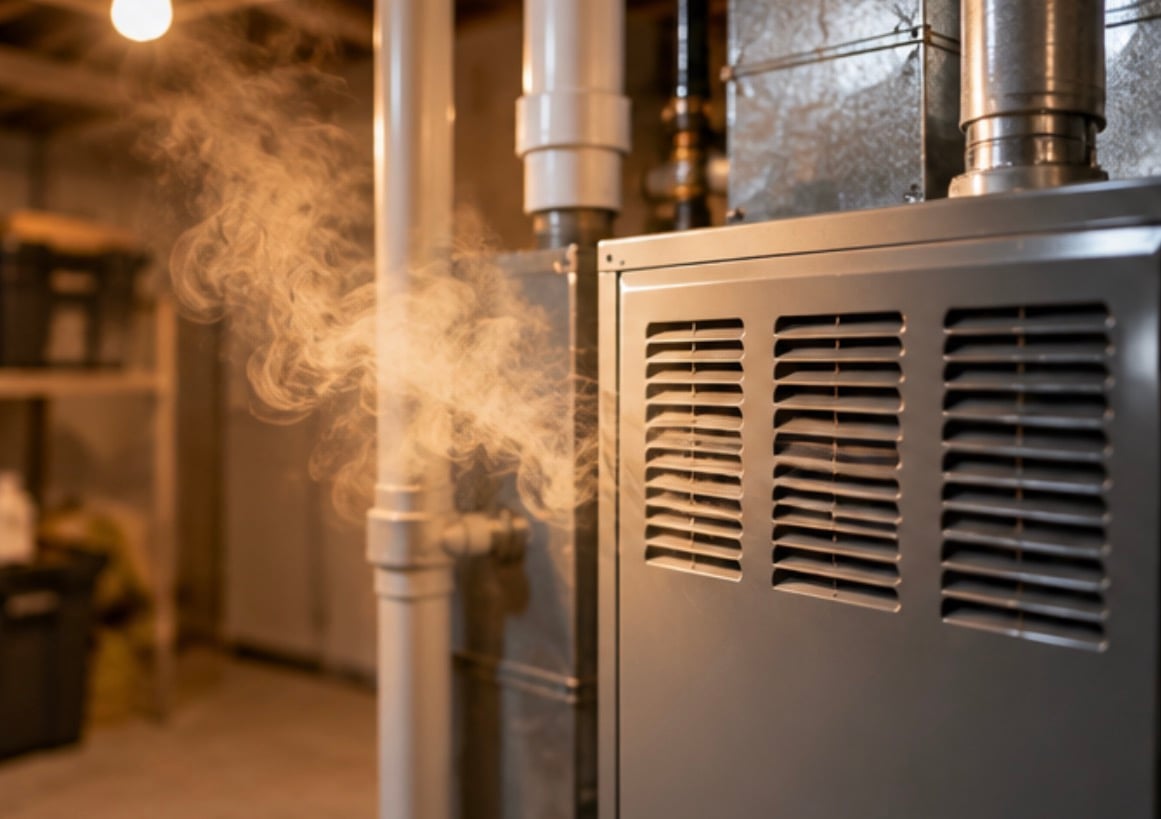
After sitting mostly unused during the warmer months, your furnace can accumulate dust around the heat exchanger, burner area, blower compartment, and other internal surfaces. When the furnace starts heating again, that dust can warm up and create a temporary odor that travels through the ductwork.
A normal first-use smell should be relatively mild and should gradually disappear rather than becoming stronger. These are some of the characteristics homeowners can watch for:
- Dusty or dry smell: Often comes from dust warming on internal furnace surfaces.
- Short duration: The odor should noticeably weaken after the first few heating cycles.
- No unusual furnace behavior: The system should otherwise start, heat, and shut down normally.
- No smoke or visible scorching: A normal dust odor should not produce smoke or signs of burning.
- Does not return repeatedly: The smell should not become noticeable every time the furnace starts.
If the odor becomes stronger, persists well beyond the initial startup, or is accompanied by smoke, unusual noises, electrical symptoms, or poor furnace operation, shut the system down and have it inspected. The smell itself is useful information, but how the furnace behaves alongside it is often what helps determine whether you are dealing with ordinary dust burn-off or a problem that needs attention.
Which Furnace Smells Are Safe and Which Are Not?
The character of the smell matters more than its strength. A faint chemical odor can be considerably more serious than a strong dusty one, which is why describing it accurately is more useful than describing how noticeable it is.
The table below covers the smells that account for nearly every call of this kind. Two of these rows are reasons to leave the building rather than book an appointment.
| What You Smell | What It Usually Means |
|---|---|
| Dry and dusty, only on the first burn | Accumulated summer dust burning off the heat exchanger. Normal. |
| Rotten eggs or sulfur | A natural gas leak. Utilities add this odor deliberately so it is noticed. |
| Burning plastic or sharp electrical | Overheating wiring, a control board component, or a failing blower motor. |
| Hot metal, with the blower straining | A seized bearing or a motor running well above its normal temperature. |
| Smoky, even faintly | A combustion problem, or debris sitting in the burner compartment. |
| Musty, only while heat runs | Moisture or biological growth in the ducts or the cabinet. |
The rule that covers most situations is simple. If it smells like dust and it fades within the hour, it is almost certainly fine. If it smells like anything else, or it does not fade, the system should be shut off rather than monitored.
What Makes an Electrical or Gas Smell Different From Dust?
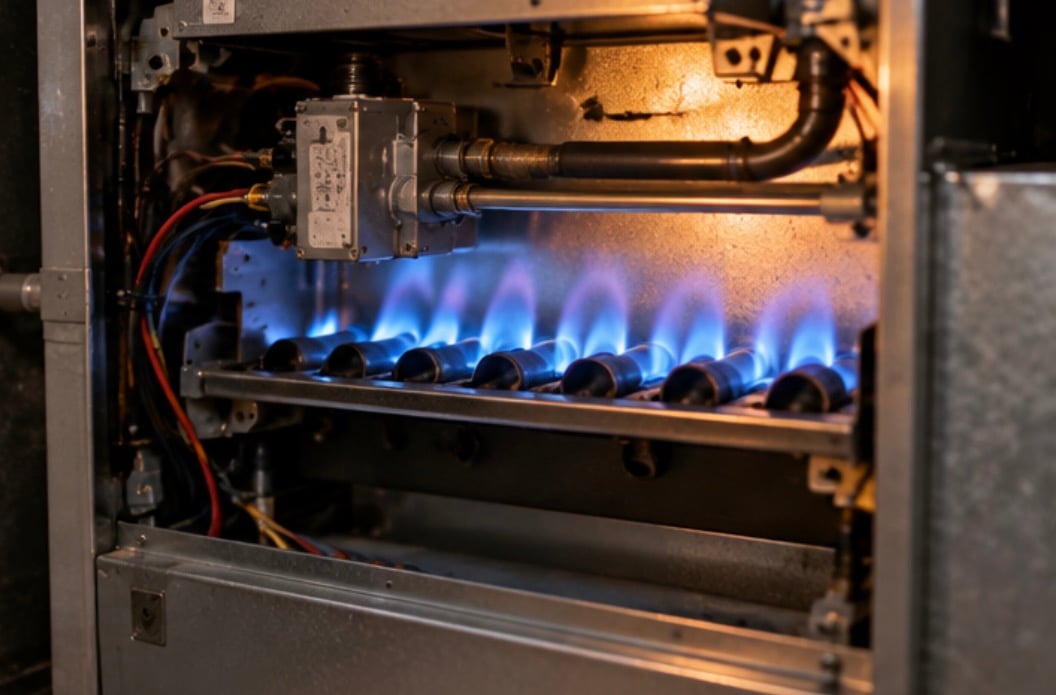
Homeowners tend to describe every furnace odor as burning, which makes the categories harder to separate than they need to be. Four characteristics reliably distinguish a genuine fault from the seasonal dust smell that almost every household in the Valley notices in November.
Arrives Without the First-Burn Pattern
Dust burn-off happens on the first firings of the season and then stops. A smell that appears mid-winter, on a system that has been running for weeks, has nothing to do with accumulated dust.
Persists Rather Than Fading Within the Hour
The defining feature of dust is that it is consumed. An odor still present after a full day of normal operation is coming from something that is being heated continuously and should not be.
Carries a Chemical or Sulfur Character
Dust smells dry and slightly scorched. Anything sharp, chemical, sulfurous or resembling melting plastic belongs to a different category entirely and warrants shutting the system down.
Comes With Other Symptoms in the House
Headaches, nausea, soot marks near the burner compartment or a flame that shifts when the blower starts are all signs that go beyond odor. Any of them moves the situation from inconvenient to urgent.
If your smell matches the first category, opening a window and letting the system run through its cycle is generally all that is needed. If it matches any of the others, the safest sequence is to stop the system first and diagnose afterward. Furnace repair in Modesto covers the diagnostic side.
What Should You Do Before a Technician Arrives?
The right first action depends entirely on what you are smelling, and in two of these cases it involves leaving the building rather than waiting inside it. Getting that sequence right matters considerably more than getting a technician to the property quickly.
The responses below are ordered by urgency. The first two rows are not HVAC service calls at all, and treating them as such delays the response that actually protects the household.
| Situation | What to Do First |
|---|---|
| Rotten eggs or sulfur | Leave the building. Do not use switches, phones or the garage door until outside. |
| A carbon monoxide alarm sounding | Get everyone out and call 911. Investigate the cause only afterward. |
| Burning plastic or electrical odor | Shut the system off at the thermostat and at the breaker, then arrange service. |
| Hot metal with a straining blower | Shut it down. Continuing to run it risks the motor and the wiring around it. |
| Any smoky odor | Shut it down and leave it off until the burner compartment has been inspected. |
| Dusty smell on the first burn | Open a window and let it run. No action beyond that is needed. |
For a suspected gas leak, the gas utility is the correct first call rather than a contractor. PG&E responds to suspected leaks free of charge and can isolate the supply, which no HVAC company is able to do. The appliance side gets handled afterward, once the situation has been made safe, and heating repair covers that stage of the work.
What Happens During a Furnace Safety Inspection?
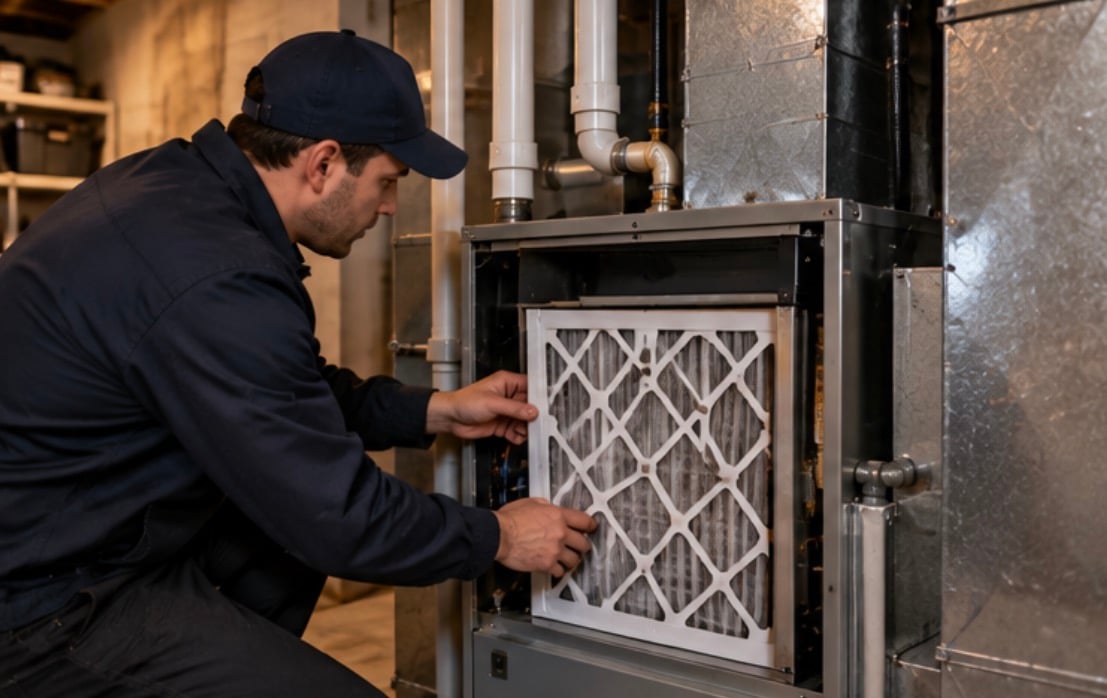
A safety inspection is a defined sequence rather than a general look around, because the most serious furnace faults produce no smell at all. The point is to test for conditions that a homeowner has no way of detecting.
Inspecting the Heat Exchanger Visually and With a Camera
The exchanger surfaces are examined directly and with a camera where the geometry hides them. Cracks in this component can allow combustion gases into the air circulating through the house.
Testing Combustion and Checking the Supply Air
Combustion is measured and the supply air is tested for carbon monoxide. This catches a developing problem well before any alarm in the house would register it.
Examining the Burner Assembly and Flame Behavior
The burners are inspected and the flame is watched as the blower engages. A flame that shifts or distorts at that moment is a recognized indicator worth investigating further.
Checking Electrical Connections and Blower Condition
Connections and the control board are checked for heat damage, and blower amp draw and bearings are tested. A loose terminal or a tired bearing is what later becomes the electrical smell described above.
A crack in a heat exchanger is also one of the few findings where replacement is usually the honest recommendation, because on most residential furnaces the component cannot be economically replaced. It is a finding worth seeing evidence for, so ask to be shown what was found.
Everything else on that list is repairable, and most of it is cheaper to address before it becomes a smell. A loose terminal, a tired blower bearing and a blocked burner all announce themselves in an inspection long before they announce themselves in the hallway.
Does an Annual Tune-Up Prevent These Smells?
It prevents most of them, though not every one. Cleaning the burner assembly and cabinet before the season reduces the dust available to burn off, which shortens or removes entirely the first-burn smell that prompts the majority of these questions each November.
More usefully, the electrical and mechanical checks catch the faults that produce the serious odors. A corroded terminal found in October does not become the burning plastic smell in January, and a tired blower bearing replaced on schedule never reaches the point of overheating.
What maintenance cannot prevent is a gas leak at a fitting or supply line, which is why any sulfur smell remains a utility call regardless of how recently the furnace was serviced. Booking furnace maintenance in Modesto before the season addresses the rest.
FAQs
How Long Should the Dust Smell Last?
Roughly twenty to thirty minutes of the first burn, and noticeably weaker on the second and third cycles. If it is still present after a full day of operation, it is no longer dust burn-off.
Should I Shut the Furnace Off If I Smell Something?
For anything other than first-burn dust, yes. Switch it off at the thermostat, and at the breaker if the smell is electrical. Running it longer makes neither the diagnosis nor the repair any cheaper.
What Does a Cracked Heat Exchanger Smell Like?
Often it produces almost no smell at all, which is the danger. When there is one, it tends to be faint and chemical, and it is frequently accompanied by headaches or soot rather than an obvious odor.
Is a Carbon Monoxide Detector Enough on Its Own?
It is necessary but not sufficient. A detector tells you carbon monoxide has already reached the air, whereas a combustion inspection identifies the furnace producing it before that point is reached.
Why Does the Smell Return Every Winter?
Because the dust returns every summer. Any system that sits idle through a Valley summer collects it, and homes near orchards or unpaved roads tend to collect noticeably more than average.
Why Choose Dycus Heating and Air Conditioning for Furnace Service in Modesto?
A furnace odor is not something that should be diagnosed by smell alone. If an odor continues after startup, returns during later heating cycles, or comes with unusual furnace behavior, the safest approach is to have the system inspected to determine what is actually causing it. Regular furnace maintenance in Modesto can also help identify developing problems before they turn into an unexpected heating failure.
Dycus Heating and Air Conditioning has been family owned in Modesto since 2001, with NATE-certified technicians serving local homeowners. If testing identifies a problem that requires attention, our furnace repair services can address the underlying issue rather than simply treating the symptom.
If the smell is mild, dusty, and fades after the furnace has run for a short time, it may simply be seasonal dust burning off. But if you notice a persistent burning odor, smoke, an electrical smell, or anything suggesting a gas leak, turn the furnace off and prioritize safety.
For a suspected gas leak or rotten-egg odor, leave the building and contact the gas utility or emergency services from a safe location before arranging HVAC service. For other furnace concerns that require professional evaluation, call (209) 544-8072.