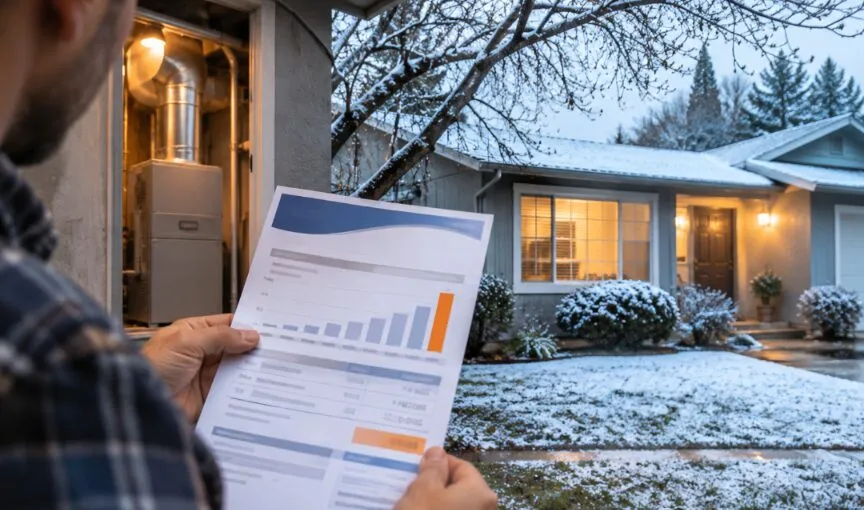
Your PG&E gas bill is high in winter for two reasons. The furnace runs far more hours, and any gas past your baseline allowance costs more at the Tier 2 price. Leaky ducts, an older furnace and thermostat habits can push usage higher still.
We are Dycus Heating and Air Conditioning, a heating company in Modesto. This guide shows how to read your bill, what in the house drives usage and which fixes to try first, before anyone talks about a new furnace.
How PG&E Prices Winter Gas
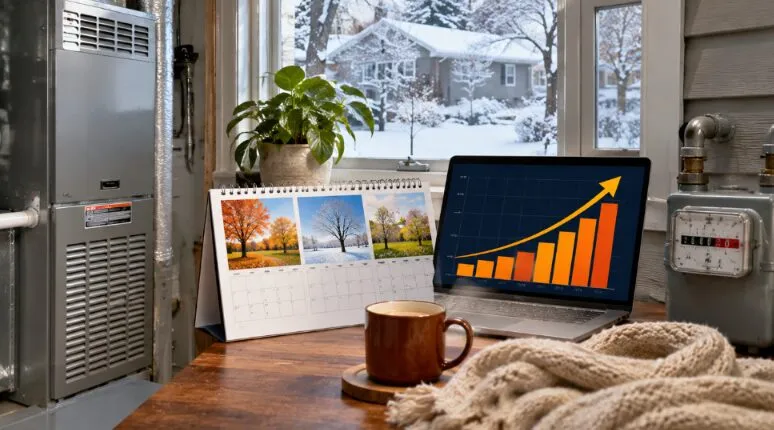
PG&E bills home gas in two tiers. Each home gets a baseline allowance, a set amount of gas billed at the lower Tier 1 price. Gas used past that allowance is billed at the higher Tier 2 price. So more furnace hours raise the bill in two ways.
Gas Within Your Baseline
Your allowance depends on your baseline territory, your main heating source and the season. PG&E works it out per day, so a longer billing period gives you a larger total allowance.
Usage Above Your Baseline
Once you pass the allowance, the extra gas is billed at the Tier 2 price for that billing period. Rates change, so compare the prices shown on your own statements rather than assuming they stay the same all winter.
December and January Allowances
PG&E splits the year into seasons. November, February and March are winter off-peak months. December and January are winter on-peak months and get a larger allowance, since homes heat more then. A very cold month can still push you past it.
Why Does the Bill Jump So Much?
Heating costs do not rise in a straight line with the cold. In a mild fall month, the furnace runs in short bursts. When Modesto gets several cold, foggy days in December or January, it may run much longer to hold the same temperature.
That extra run time adds up, and once usage passes the baseline, the extra gas costs more. A bill that jumps does not mean the furnace has failed. Colder weather, longer cycles, a price change and a longer billing period can all add to it.
Other gas appliances add to winter use too.
- Your water heater works harder because the incoming water is colder.
- A gas fireplace adds more on cold evenings.
- Holiday cooking adds stove and oven use, though far less than heating.
- Longer billing periods, such as 35 days instead of 29, hold more days of use.
To see what changed, compare your average daily gas use, not just the total. If daily use has climbed a lot, look at heating run time, thermostat settings, insulation and the furnace itself before you think about a replacement.
What Drives Gas Use at Home
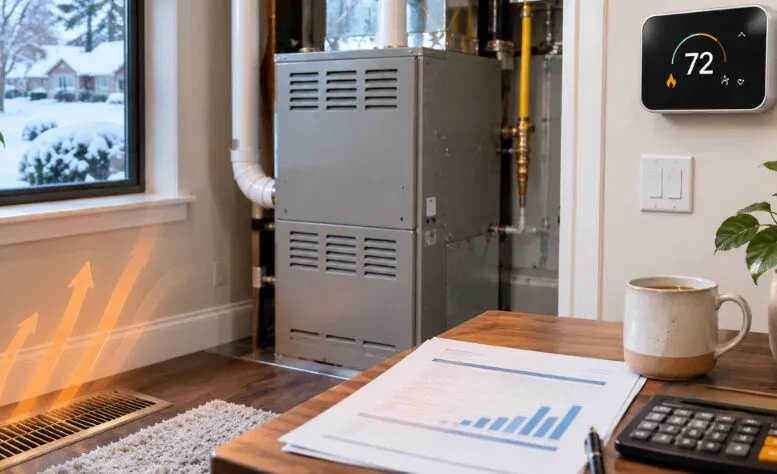
PG&E sets the price per therm, but your home decides how many therms you use. These five factors explain most of the gap between similar homes. Most of them cost far less to fix than a new furnace.
Furnace Efficiency
A furnace’s AFUE rating tells you how much of the gas it burns becomes heat in your home. Many older furnaces are rated around 80% or lower, while high-efficiency models reach 95% or more. An older furnace that is out of tune can fall below its rating.
Leaky Ducts in the Attic
In many Modesto homes the ducts run through the attic, which is close to outdoor temperature in winter. Leaky joints and torn duct runs dump heated air into the attic before it reaches your rooms, so the furnace runs longer.
Thermostat Habits
Keeping the house at one temperature day and night uses more gas than a setback. Lowering it 7 to 10 degrees for eight hours a day can cut a home’s heating and cooling costs by up to 10% a year, according to the Department of Energy.
Skipped Maintenance
A clogged filter, dirty burners or a worn blower motor make the furnace run longer for the same heat. A furnace that has gone years without service may also short cycle, starting and stopping over and over. That wastes gas and wears out parts sooner.
The Water Heater
A gas water heater is often the second-biggest gas user in the home, and winter makes it work harder. Most homes only need the tank set at 120°F. That saves energy and lowers the risk of scalds.
Should You Replace the Furnace First?
A new high-efficiency furnace burns less gas for the same heat. For an old furnace that keeps failing, it can be the right move. For a furnace that still runs well, it is the most costly way to lower a gas bill.
A new furnace on the same leaky ducts still loses heated air into the attic. Many homeowners spend thousands on equipment and see a smaller drop than they expected, because the main loss was the ductwork all along.
Start with the low-cost fixes, such as thermostat settings, maintenance and ductwork. If the furnace is old and failing anyway, compare a new gas furnace with a heat pump. In Modesto, a heat pump runs on power from the irrigation district, not PG&E gas. That changes the math.
Causes and Fixes, Lowest Cost First
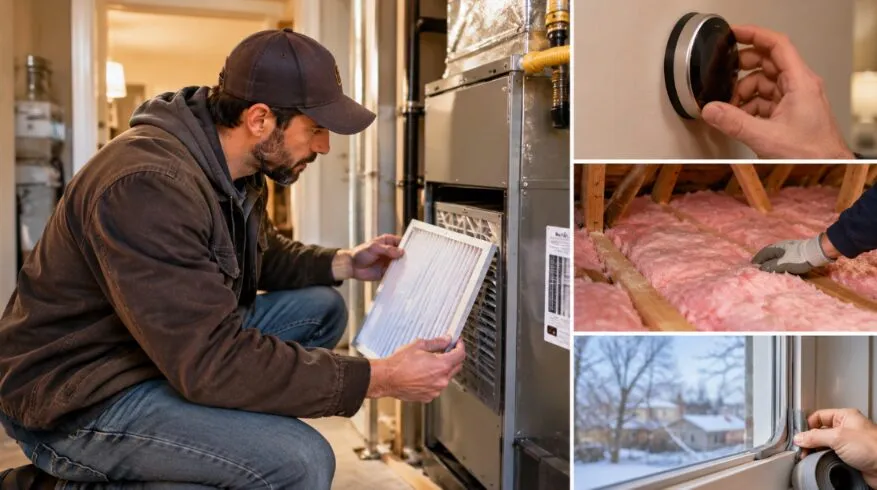
Most high winter gas bills come from a mix of causes. This table lists the common ones, the sign that points to each and the fix. They run from the lowest cost to the highest, so you can start at the top.
| Cause | Sign | Fix |
|---|---|---|
| Usage past baseline | Most gas billed at Tier 2 | Lower usage with the fixes below |
| Thermostat habits | Same setting day and night | Program a nightly setback |
| Dirty filter | Weak airflow from vents | Replace the filter |
| Skipped maintenance | Short cycling, slow heat | A fall Energy Savings Agreement visit |
| Leaky ducts | Rooms far from the furnace stay cold | Replace leaking ductwork |
| Old furnace | 15 to 20 years old, frequent repairs | Replace with a high-efficiency furnace or heat pump |
New systems come with a free Wi-Fi thermostat, worth up to $200, which makes the setback automatic. Leaking duct runs are a bigger job, but new ductwork stops you paying to heat the attic every winter.
Steps That Lower the Gas Bill
Some fixes take an afternoon, and some need a technician. Start with the free ones. Then book service before the coldest weeks of December and January, when extra gas is most likely to land in Tier 2.
- Check your bill for your baseline territory and how much gas reached Tier 2.
- Change the furnace filter.
- Book a fall maintenance visit before the cold sets in.
Our furnace maintenance runs through the Energy Savings Agreement, with a fall and a spring visit. The fall visit is the time to check the burners, heat exchanger, blower and filter. It also catches short cycling before it wastes a winter of gas.
When the Bill Points to the Furnace
A higher bill in January than in October is normal. A bill that jumps far past the same month a year earlier, in similar weather, often means something in the system has changed. That is worth a service call before another billing cycle closes.
Watch for these signs, especially on a furnace more than 15 years old. A yellow flame or soot near the furnace is a safety concern as well as a cost one, so call for service right away if you see either.
- The furnace starts and stops every few minutes.
- The burner flame looks yellow or flickers instead of mostly blue.
- Some rooms never reach the set temperature.
- The furnace needs a repair every winter.
If the furnace is worn out and failing, a high-efficiency furnace replacement lowers gas use for years to come. Pair it with sound ductwork, and the savings show up on your winter bills.
Furnace Service That Lowers Winter Gas Use
A high winter gas bill often comes from usage, ducts and habits, not a broken furnace. We maintain, repair and replace furnaces. We check the whole system before anyone talks about a new one.
Dycus Heating and Air Conditioning opened in Modesto in 2001 and is still family-owned. Our owner teaches the trade, and he trained our NATE-certified technicians in-house. We offer same-day service and serve homes across Modesto, Manteca, Ceres and Riverbank.
Ask us for a furnace check before the coldest weeks. We pick up the phone from 7:00 AM to 5:30 PM, Monday through Friday.
Frequently Asked Questions
How do I find my PG&E baseline territory?
Look in the service details on your PG&E statement. Your territory is a letter code, and it sets how much gas you get at the Tier 1 price. Most Modesto homes get gas from PG&E and power from the Modesto Irrigation District, on a separate bill.
Does furnace maintenance lower a gas bill?
It helps when the furnace is part of the cause. A clean filter, clean burners and a well-adjusted flame let the furnace work close to its rating. Maintenance will not fix leaky ducts or a very cold month, so compare your daily gas use before and after the visit.
How much does furnace maintenance cost in Modesto?
Our Energy Savings Agreement is $189 for the first system and $169 for each one after, or $229 out of area. It covers a spring and a fall visit. Members get 15% off repairs, no overtime rate and a free estimate on any equipment replacement.
How much is a furnace diagnostic in Modesto?
Our diagnostic is $99 on weekdays, $129 for homes more than 20 miles from our shop and $150 on weekends and after hours. It does not roll into the repair. Repairs are flat-rate, so you get the price from our book before any work starts.
Do you serve homes outside Modesto?
Yes. We work within about 15 to 20 miles of our Modesto shop, which covers Manteca, Riverbank, Ceres, Salida, Turlock, Ripon and nearby towns. Keeping the area tight keeps drive times short, so a technician reaches you sooner.