Skip to content

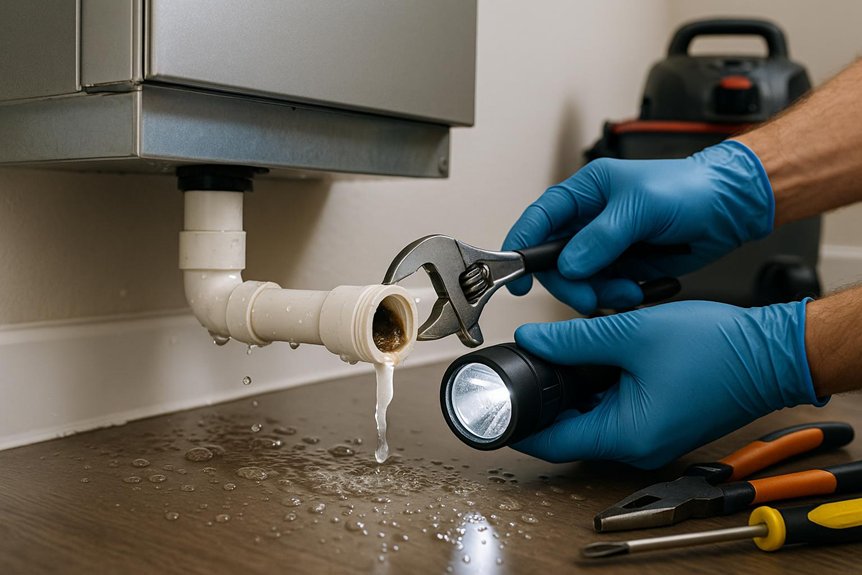
Water leaking from your AC unit is a common issue many homeowners in Modesto, CA face—especially during peak summer when systems run for long hours. Your air conditioner naturally produces condensation as it removes humidity from indoor air, and that moisture is supposed to drain safely through a condensate line. When that line becomes clogged, water has nowhere to go, leading to leaks around your unit. In Modesto’s dry and dusty climate, buildup inside these lines happens more often than many homeowners expect. Understanding why this happens can help you catch the problem early and prevent water damage.
Why AC Systems in Modesto Often Develop Condensate Drain Issues
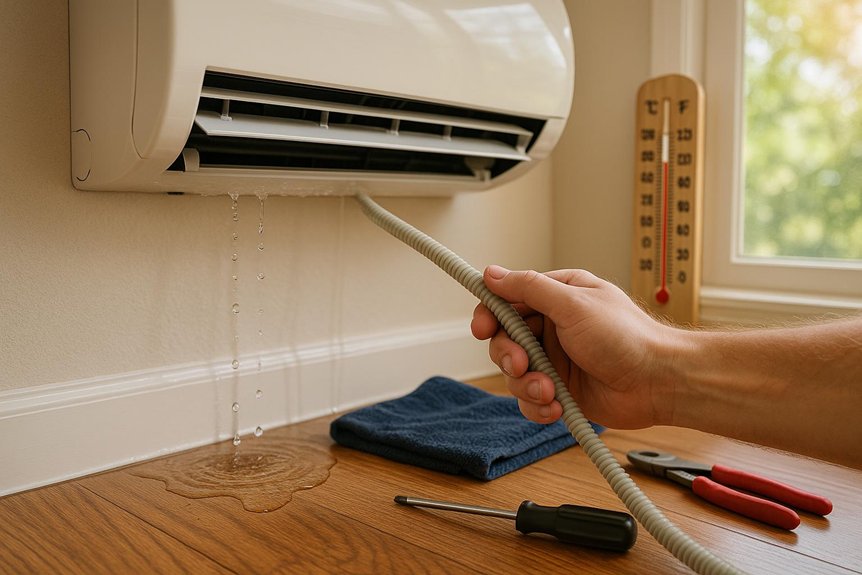
In Modesto, AC systems operate for extended periods due to long, hot summers. As the system cools your home, it continuously produces condensation that must flow through the drain line. Over time, environmental factors like dust, debris, and temperature fluctuations can interfere with proper drainage. These conditions make condensate line issues more common compared to milder climates.
Factors that contribute to drain issues include:
- Extended AC Usage: Longer system runtime produces more condensation, increasing the likelihood of drain line buildup.
- Dry, Dusty Air: Dust enters the system and settles inside the drain line, causing gradual blockages.
- High Cooling Demand: Frequent cooling cycles generate excess moisture, leading to faster clog formation over time.
- Infrequent Maintenance: Lack of routine cleaning allows debris, algae, and buildup to accumulate inside the line.
- Temperature Variations: Warm conditions promote algae growth and speed up blockage development within the drain line.
As these conditions build over time, your condensate drain line can slowly become restricted without obvious warning. What starts as minor buildup can quickly turn into a blockage, especially during peak cooling periods. Many homeowners first notice the issue when water begins collecting near the indoor unit, or performance starts to feel off. Recognizing these early signs can help prevent more serious problems.
Common Signs of a Clogged AC Condensate Line
A clogged condensate line doesn’t always start with a major leak. In many cases, the early signs are subtle and easy to overlook. Recognizing these symptoms early can help prevent more serious issues later. Many homeowners don’t notice these signs until water leakage becomes visible.
Watch for these warning signs:
- Water Pooling Near Unit: Moisture is collecting around the indoor air handler.
- Musty Odor: Stagnant water can create unpleasant smells in your home.
- AC Shutting Off Unexpectedly: Safety switches may trigger due to water buildup.
- Increased Indoor Humidity: System struggles to remove moisture effectively.
- Visible Drain Line Blockage: Debris or buildup near the drain outlet.
If you notice these signs developing, it usually means the drainage process is being restricted. Addressing the issue early can prevent further complications. In many cases, these symptoms are caused by a buildup inside the condensate drain line.
How Dust and Debris Contribute to Drain Line Blockages
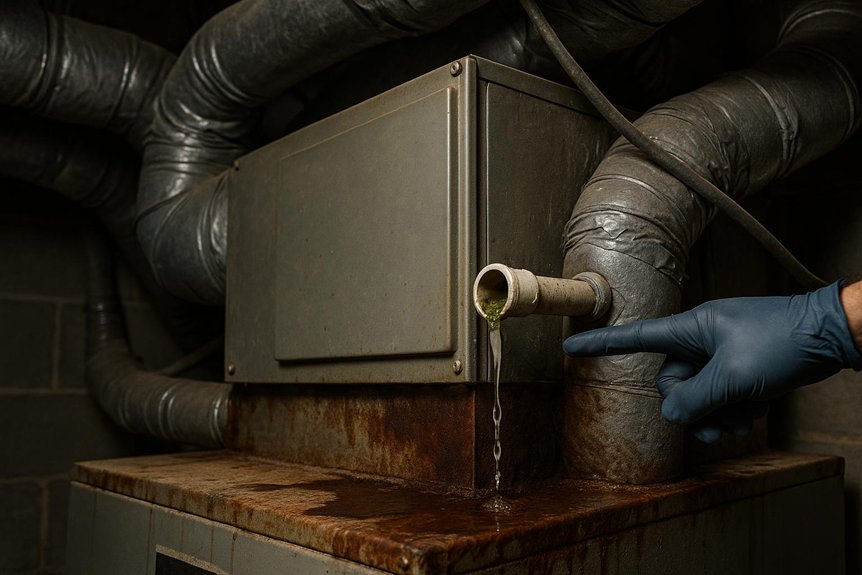
Dust is one of the most common contributors to clogged condensate lines in Modesto homes. As air moves through your system, fine particles pass through filters and settle inside the drain line. Over time, this buildup combines with moisture to create blockages.
Common internal issues include:
| Issue | Impact on Your AC System |
|---|---|
| Particle Accumulation | Dust and debris settle inside the drain line, gradually narrowing water flow. |
| Sludge Formation | Moisture combines with dirt, creating thick buildup that clogs the drain line. |
| Restricted Flow | Blockages prevent proper drainage, causing water to back up into the system. |
| Increased Pressure | Backup pressure can lead to leaks or overflow around the indoor unit. |
| Reduced Efficiency | Drain issues force the system to work harder, lowering overall cooling performance. |
As debris continues to build, drainage slows further. This creates the perfect conditions for more serious blockages to develop.
How Algae and Moisture Buildup Cause Water Leaks
In addition to dust, moisture inside the condensate line can lead to biological growth such as algae. Even in a dry climate like Modesto, the inside of the drain line remains damp, creating an environment where buildup can form over time. This buildup often develops silently until drainage problems become noticeable.
How moisture leads to clogs:
- Algae Growth: Moist conditions inside the line encourage organic buildup.
- Sticky Residue: Growth attaches to pipe walls and traps debris.
- Gradual Blockage: Flow becomes restricted as buildup increases.
- Water Backup: Condensation cannot drain properly and returns to the unit.
- Leak Formation: Excess water spills out around the system.
This type of blockage often develops slowly, which is why leaks may appear suddenly even though the problem has been building over time.
Risks of Ignoring a Clogged Condensate Drain Line
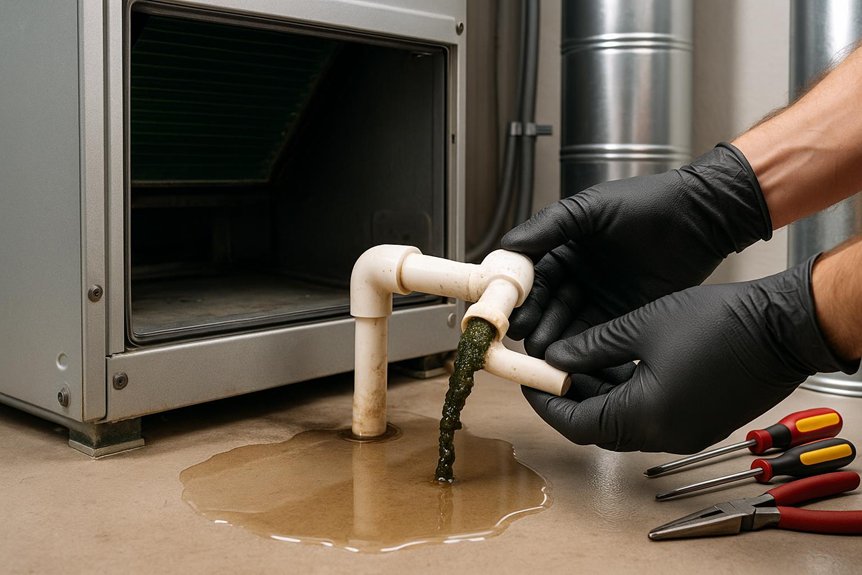
Ignoring a clogged drain line can lead to more than just minor water leaks. As moisture accumulates, it can affect both your HVAC system and your home’s interior. In many cases, what starts as a small issue can escalate into costly repairs.
Potential risks include:
- Water Damage: Floors, walls, or ceilings may be affected by continuous leaks.
- Mold Growth: Moisture creates conditions for mold and mildew development.
- System Shutdown: Safety switches may stop the system to prevent damage.
- Reduced Cooling Efficiency: System performance declines due to internal strain.
- Higher Repair Costs: Delayed action often leads to more extensive repairs.
As these problems worsen, simple fixes may no longer be enough to restore proper drainage. Understanding how HVAC professionals clear and prevent drain line clogs can help you avoid recurring issues and keep your system running reliably. These steps not only clear existing clogs but also help prevent future drainage issues.
How HVAC Technicians Clear and Prevent Drain Line Clogs
When a condensate line becomes clogged, professional cleaning is often the most effective solution. Technicians use specialized tools and methods to remove buildup and restore proper drainage. Preventive steps can also reduce the chances of future clogs.
Typical professional solutions include:
- Line Flushing – Clears debris and buildup inside the drain pipe to restore proper water flow.
- Vacuum Removal – Uses strong suction to remove stubborn clogs and accumulated sludge effectively.
- Drain Inspection – Identifies blockages, damage, or restrictions that may affect proper drainage performance.
- Preventive Treatments – Apply solutions that help reduce algae growth and future buildup inside the line.
- System Check – Verifies proper drainage flow and ensures the AC system is functioning correctly after cleaning.
Regular AC maintenance plays a key role in preventing recurring drain line clogs and keeping your system running efficiently throughout the cooling season. By addressing buildup early and ensuring proper drainage, routine service helps reduce the chances of unexpected leaks and supports consistent system performance over time.
When You Should Call a Professional for AC Water Leaks
While some minor maintenance tasks can be handled at home, persistent leaks can quickly become frustrating, especially when you notice water pooling around your unit or worry about damage to your floors and walls. If the issue continues or worsens, it may indicate a deeper problem within the system that requires professional attention.
Situations where professional help is needed:
| Situation | What It Indicates |
|---|---|
| Repeated Leaks | Water continues returning, suggesting the underlying issue has not been fully resolved |
| System Shutdowns | Safety switches may be triggering due to internal water buildup or system protection measures |
| Visible Damage | Leaks have begun affecting floors, walls, or nearby structural areas in your home |
| Strong Odors | Musty smells may indicate mold, mildew, or buildup inside the system |
| Unclear Cause | The source of the leak is difficult to identify without professional inspection |
In these cases, scheduling a professional air conditioning repair service in Modesto can help identify and resolve the issue properly. Choosing the right Air conditioning company becomes just as important as fixing the issue itself. Working with a trusted local expert ensures you receive reliable diagnostics, effective repairs, and long-term solutions tailored to Modesto’s demanding climate conditions.
Why Choose Dycus for AC Repair in Modesto, CA
When water leaks begin affecting your AC system, working with a local team that understands Modesto’s climate can make a noticeable difference. Dycus Heating and Air provides AC repair and maintenance services designed to handle common issues caused by extended system use and local environmental conditions.
If you’re dealing with ongoing drainage problems or system performance issues, scheduling professional AC repair in Modesto, CA can help restore proper operation and prevent further damage.